Top 2026 Fake Plant Trends Every Buyer Should Know?
In the world of interior design, Fake Plants have surged in popularity. As sustainability becomes a top priority, these low-maintenance alternatives bring the beauty of nature indoors. Renowned expert Sarah Bloom, a leading authority in artificial greenery, states, "Fake plants offer an ideal blend of aesthetics and practicality for modern living."
Trends for 2026 reveal diverse styles and materials. From ultra-realistic faux foliage to quirky, imaginative designs, the market is evolving. Consumers now seek not only beauty but also functionality. They want plants that withstand the test of time. However, discerning the quality of fake plants can be challenging. Buyers must navigate the vast options available and identify what truly meets their needs.
As trends shift, one thing remains clear: the fake plant industry is flourishing. The right choice can enhance any space, while poor selections may lead to dissatisfaction. By understanding these trends, you can make informed decisions and enjoy the enduring charm of fake plants in your home.
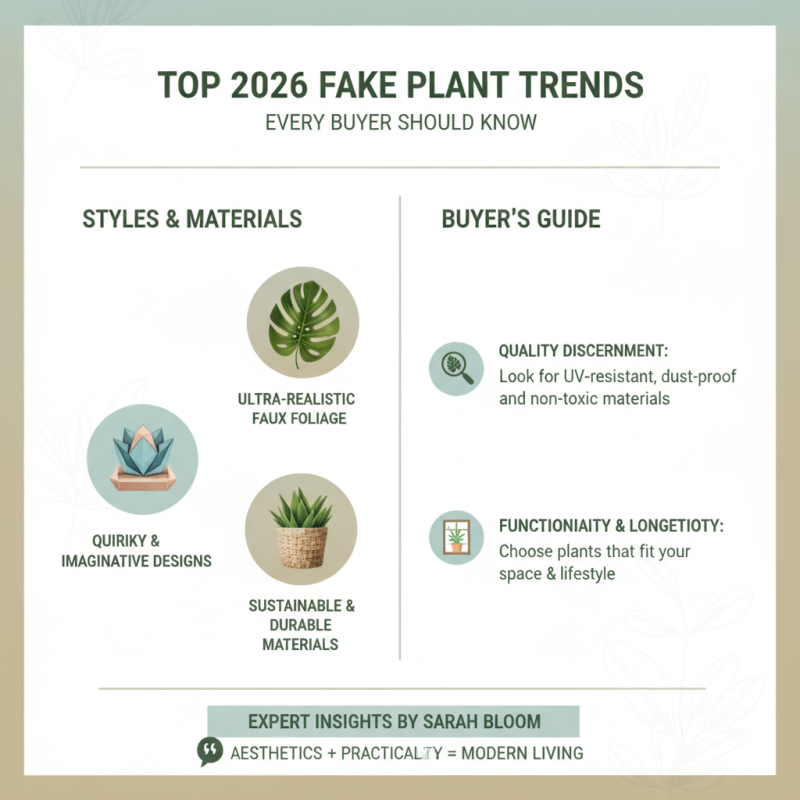
Emerging Trends in Fake Plant Design for 2026
As we look ahead to 2026, the landscape of fake plant design is evolving rapidly. One notable trend is the rise of ultra-realistic textures. Designs are incorporating fine details, such as varied leaf veins and natural-looking edges. This emphasis on realism creates a vibrant and authentic feel. Homeowners want their fake plants to mimic real flora more closely than ever before.
Another emerging trend is sustainability in materials. Many designers are turning to recycled plastics and eco-friendly options. This reflects a growing awareness of environmental issues among consumers. People want decor that aligns with their values, even when it comes to faux plants.
Additionally, bold color palettes are making a comeback. Deep greens mixed with unexpected hues bring freshness to any space.
However, the path to these trends isn’t always clear-cut. As designers push boundaries, some may struggle with the balance between aesthetics and realism. Not every attempt at innovation hits the mark. It's crucial to prioritize quality in design, ensuring that the final product truly enhances living spaces. In this evolving market, both consumers and creators have much to consider.
Sustainable Materials and Eco-Friendly Options in Fake Plants
As the demand for fake plants grows, buyers are increasingly prioritizing sustainability. Eco-friendly materials are at the forefront of these trends. Many manufacturers now use recycled plastics or biodegradable materials in their products. This shift not only reduces waste but also minimizes the ecological footprint of decorative plants. Producing with these materials often requires innovative techniques, which can be a challenge for some brands.
Texture and realism are key factors for many consumers. High-quality fake plants mimic the look and feel of real ones. However, some faux plants still struggle to capture the nuanced beauty of nature. Buyers might find themselves choosing between an environmentally friendly option and a highly realistic one. In the end, finding a balance is essential. The search for greener alternatives often comes with imperfections. Understanding both the benefits and drawbacks of these materials can lead to more informed purchasing decisions. Each choice impacts our environment, and reflecting on this can deepen our appreciation for both nature and design.
Popular Colors and Patterns for Artificial Foliage in 2026
In 2026, the world of artificial foliage is exciting and evolving. Popular colors for fake plants this year include vibrant greens, earthy browns, and soft pastels. These hues mimic natural plants, creating an inviting environment in homes and offices. Patterns are also trending, with leaf motifs and textured surfaces gaining traction. Choosing the right combination can enhance your space dramatically.
When selecting artificial plants, think about their placement. For small spaces, opt for lighter colors. This choice can make a room feel open and airy. Large, bold plant designs work well in spacious areas. They serve as stunning focal points. Consider varying the heights of your plants, adding dimension. This adds depth to your decor.
It's essential to care for fake plants properly. Dust them regularly to maintain their beauty. Avoid direct sunlight, which can fade colors. If you're unsure about your choices, try experimenting. Mix and match different styles. You might discover unexpected combinations that work perfectly. Embrace imperfections; finding what resonates with you takes time.
Top 2026 Fake Plant Trends Every Buyer Should Know
| Trend | Popular Colors | Favorite Patterns | Material Type |
| Tropical Foliage | Deep Green, Bright Yellows | Bold Leaf Patterns | Polyester Blend |
| Succulents | Muted Greens, Dusty Pinks | Geometric Shapes | Silk |
| Bamboo Arrangements | Natural Greens, Earthy Browns | Minimalistic Lines | Plastic with Natural Finish |
| Flowering Plants | Bright Reds, Soft Purples | Floral Textures | Polyethylene |
| Ferns | Vibrant Greens | Lush, Layered Patterns | PVC |
Innovative Technologies Enhancing Realism in Fake Plants
As the demand for artificial greenery rises, innovative technologies are shaping the future of fake plants. Recent data suggests that the global artificial plants market is expected to reach $4 billion by 2026. This growth stems from advancements that enhance realism. Cutting-edge materials like polymer blends and advanced color technology create vivid designs that mimic real foliage.
Manufacturers are turning to 3D printing to develop intricate details and textures. This method allows for precise replication of plant features, from smooth leaves to rugged bark textures. Reports indicate that 3D printed plants can exhibit a 30% increase in perceived realism compared to traditional methods. Despite these advancements, some concerns remain about sustainability. Many fake plants are still made from non-biodegradable materials.
Artificial greenery is also adopting smart technology. Some products now feature integrated sensors that can detect room temperature and humidity. This adds an extra layer of realism, as it allows plants to respond to their environment. However, this technology raises questions about usability and longevity. Balancing aesthetics with practicality will be crucial for buyers navigating these emerging trends.
Top Tips for Choosing the Right Fake Plants for Your Space
Choosing the right fake plants for your space can significantly enhance your home or office's aesthetic appeal. Recent industry reports indicate that the artificial plant market is projected to reach a staggering $4.3 billion by 2026. This growth highlights the increasing popularity of faux greenery, but selecting the perfect plants can be overwhelming.
First, consider the size of your space. A large room can accommodate bigger plants, while smaller areas benefit from compact varieties. Data suggests that 58% of buyers prefer plants that mimic real foliage. Look for options with varied textures and colors to create a more natural effect. Additionally, understand lighting conditions in your environment. Low-light artificial plants are ideal for shaded spaces, while vibrant faux flowers may bring cheer to brighter areas.
Don’t overlook the materials used in the plants. High-quality plastics often provide longevity, but they might not achieve the realism you desire. Reports show that 45% of buyers are concerned about the environmental impact of these materials. Reflect on the blend of look and sustainability when making your choice. Embrace imperfections too; not every plant needs to look perfectly manicured. A slightly wild arrangement can evoke a more authentic atmosphere, bringing warmth and life to your surroundings.