7 Air Circuit Breaker Buying Tips for Global Buyers
Buying an Air Circuit Breaker for an international project involves more than comparing prices and catalog photographs. Buyers must connect electrical performance with site conditions, compliance requirements, maintenance skills, and long-term operating costs. A breaker selected for a factory in Southeast Asia may not suit a data center in Europe. Voltage, frequency, fault levels, ambient temperature, altitude, and enclosure design all matter.
Dr. J. C. Das, a recognized power-system protection specialist, offers a practical principle: “A circuit breaker must interrupt fault current safely, repeatedly, and reliably.” This idea should guide every purchasing decision. Check the rated operational voltage, continuous current, short-circuit breaking capacity, and service breaking capacity. Do not rely on a single impressive number.
Small details matter.
Review the trip unit carefully. Electronic protection settings should match the transformer, cables, and downstream equipment. Verify whether the Air Circuit Breaker supports adjustable long-time, short-time, instantaneous, and earth-fault protection. Also confirm communication functions, auxiliary contacts, shunt trips, and motor operators when remote supervision is required.
Global buyers should request IEC 60947-2 compliance evidence, routine test reports, type-test information, and clear warranty terms. Authentic documents are important. So is traceable manufacturing information. Ask about spare parts, technician training, delivery schedules, and technical support in the destination country.
A cheaper unit may appear efficient. It may become expensive during maintenance.
These seven buying tips focus on practical verification rather than marketing language. Still, no checklist is perfect. Project conditions can change, and overlooked installation details can undermine a good specification. Careful review with a qualified electrical engineer remains essential before ordering.
Understanding Air Circuit Breaker Functions and Applications
7 Air Circuit Breaker Buying Tips for Global Buyers
Understanding Air Circuit Breaker Functions and Applications
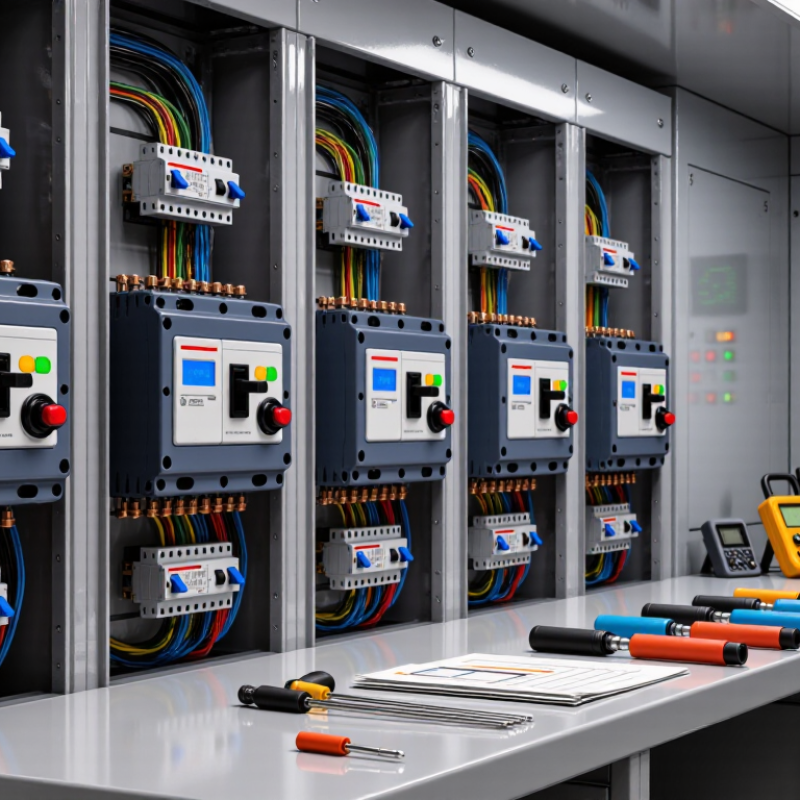
Air circuit breakers protect low-voltage power systems from overloads and short circuits. They interrupt current through air, then separate contacts inside an arc chamber. Their draw-out design supports safer inspection and faster replacement in large switchboards. The IEA Electricity 2024 report expects global electricity demand to grow by an average 3.4% annually from 2024 to 2026. More demand increases pressure on distribution equipment.
Tip 1: Match the rated current to the real load, not only the nameplate.
Tip 2: Check the short-circuit breaking capacity against the installation fault level.
Tip 3: Confirm the voltage, frequency, and number of poles.
Tip 4: Select adjustable protection settings for changing industrial loads.
IEC 60947-2 provides a useful technical reference for low-voltage circuit breakers. Still, compliance alone does not prove suitability.
Tip 5: Choose fixed or draw-out construction based on maintenance access.
Tip 6: Review communication, trip indication, and remote-control needs. These functions help operators monitor factories, hospitals, data centers, and commercial buildings.
Tip 7: Verify temperature-rise performance and enclosure compatibility. A crowded panel can reduce cooling efficiency.
Small detail, major consequence.
The IEA World Energy Outlook 2024 also highlights rising electrification and grid investment needs. Buyers should request test certificates, wiring diagrams, and service guidance.
I would not rely on a low purchase price; lifecycle downtime is often harder to measure.
Matching Breaker Ratings to Your Electrical System
Matching an air circuit breaker to an electrical system requires more than copying the panel’s ampere value. Check system voltage, frequency, continuous load, fault current, and the installation environment. The breaker’s rated service voltage must meet or exceed the system voltage. Its short-circuit breaking capacity must also exceed the prospective fault current at the installation point.
The IEA Electricity 2024 report forecasts global electricity demand to grow by about 4% annually from 2024 through 2026. That growth can increase loading on aging distribution equipment. I have seen projects where engineers selected a 1,600 A breaker for a 1,600 A busbar, then discovered insufficient fault capacity. The number looked correct. The protection margin did not.
Tip: Calculate before selecting.
Apply IEC 60947-2 requirements, then verify temperature, altitude, enclosure ventilation, and duty class. Continuous loads may require derating, especially inside warm switchboards. Set long-time, short-time, instantaneous, and ground-fault functions to coordinate with downstream devices. Selective coordination helps keep a faulted feeder offline while essential circuits remain energized. The IEEE Industry Applications Society notes that coordination studies depend on accurate time-current data and available fault calculations. Do not rely on factory-default trip settings. They are convenient, but rarely perfect for the actual network. Recheck settings after generators, transformers, or large motors are added. A small design assumption can become a serious outage.
Checking Safety Standards, Certifications, and Protection Features
7 Air Circuit Breaker Buying Tips for Global Buyers
Checking Safety Standards, Certifications, and Protection Features
When buying an air circuit breaker across borders, safety paperwork deserves the same attention as price. Ask which standard governs the unit in your installation. IEC 60947-2 is widely used, while some markets request additional national certification. Do not accept a certificate number alone. Check its holder, validity, product range, rated voltage, and test conditions. A document may cover a similar model, not the exact frame size.
Protection features must match the real electrical system. Confirm continuous current, short-circuit breaking capacity, Icu, and service breaking capacity, Ics. Review adjustable long-time, short-time, instantaneous, and ground-fault settings. These functions should coordinate with downstream breakers. Otherwise, a small feeder fault might disconnect an entire panel. Mechanical indicators, undervoltage release, shunt trip, and arc-chamber design also deserve inspection. Ask for wiring diagrams and trip curves. They reveal more than a sales table.
In procurement reviews, factory test reports are useful only when traceable to serial numbers and inspection dates. Request routine-test records, calibration evidence, and maintenance instructions. Check whether temperature-rise, endurance, and dielectric tests match the declared rating. Be cautious with vague phrases such as “internationally certified.” They sound reassuring, but they are not precise. Ask an independent engineer to review the selection. It feels slower. It can prevent an expensive mismatch. Even experienced buyers miss installation altitude or enclosure conditions, so record those assumptions before approval.
Evaluating Suppliers, Customization Options, and Product Quality
Buying air circuit breakers across borders requires more than comparing prices. I have seen projects delayed because supplier data sheets omitted short-circuit ratings. Ask about factory experience with your voltage range, application, and installation environment. Request traceable test reports, production records, and references from similar projects. A responsive engineer matters. So does a clear warranty process. Check whether the supplier explains limitations instead of promising everything.
Review customization carefully. Confirm frame size, rated current, trip unit functions, communication interfaces, auxiliary contacts, and enclosure dimensions. Ask for drawings before approval. Small errors matter. Insist on a sample or witnessed inspection for large orders. Clarify firmware control, labeling, manuals, spare parts, and delivery packaging. Custom features should be documented, priced, and tested. Verbal promises are weak evidence.
Product quality appears in details such as copper connections, insulation spacing, operating mechanisms, terminal torque, and repeated trip testing. Request incoming material controls and final inspection criteria. Independent laboratory verification can strengthen confidence with unfamiliar suppliers. Compare test conditions, not only certificate names. During one evaluation, our team focused on appearance and missed an unclear maintenance interval. That was a useful mistake. Build a checklist covering seven areas: supplier capability, test evidence, customization, compatibility, quality control, service, and total cost. Leave room for uncertainty. Even a polished sample may not represent every production unit. Conduct pre-shipment checks and keep communication records.
Comparing Total Cost, Maintenance Needs, and After-Sales Support
When buying an air circuit breaker, compare total cost rather than purchase price. Include installation, testing, spare accessories, energy losses, and technician travel. The U.S. Department of Energy’s Operations and Maintenance Best Practices Guide reports that predictive maintenance can reduce costs by 8% to 12% compared with preventive maintenance. Reactive maintenance may cost 30% to 40% more. These figures vary by site, but the risk is clear. A cheaper breaker can become expensive after repeated trips or difficult repairs.
Maintenance needs should be visible before payment. Ask for recommended inspection intervals, contact-wear limits, trip-unit testing procedures, and replacement-part availability. IEC 60947-2 compliance confirms important performance requirements, but it does not guarantee easy servicing. Uptime Institute’s 2024 Annual Outage Analysis identifies power problems as a leading cause of serious data-center outages. For factories, one failed breaker can stop conveyors, compressors, or a full production line. Check whether local technicians can diagnose faults without shipping the unit overseas.
After-sales support deserves a written service level. Request response times, remote troubleshooting, training, warranty exclusions, and a minimum spare-parts period. Parts on paper are not enough. Confirm actual stock and delivery routes. I would also request references from installations with similar voltage and fault levels. A polished quotation can hide weak support. That is worth questioning. Some buyers overestimate brand reputation and underestimate local capability. The better decision balances five-year cost, maintenance labor, downtime exposure, and practical support.
7 Air Circuit Breaker Buying Tips for Global Buyers
Comparing total cost, maintenance needs, and after-sales support
The chart presents a practical 10-year ownership planning model for low-voltage air circuit breakers. The normalized index combines purchase and installation cost, scheduled maintenance, spare parts, training, and after-sales support. A lower score indicates a lower projected lifecycle cost. Actual results depend on the rated current, fault level, operating frequency, local labor rates, spare-parts availability, warranty terms, and service response time.
Buying checklist: verify IEC 60947-2 compliance, compare the complete delivered cost, confirm maintenance intervals, check spare-parts lead times, evaluate service coverage, review warranty exclusions, and request documented testing and commissioning procedures.