- Proudly Made in the USA

Choosing the right Aluminum Composite Panel Exporter requires more than comparing catalog prices. Product consistency, fire performance, coating durability, and shipment control directly affect project risk. The International Aluminium Institute’s industry reports emphasize material efficiency, recycling, and responsible production across the aluminium value chain. The Aluminum Association also notes that recycling aluminium can save up to 95% of the energy required for primary production. These figures make verified material sourcing increasingly important.
A reliable exporter should provide clear alloy specifications, core composition, panel thickness, coating details, and batch traceability. Ask for current test reports, not attractive brochure claims. Fire classification should follow recognized standards, such as EN 13501-1 or ASTM E84, according to the project location and building design. ISO 9001 certification can support process control, but it does not automatically prove product quality. That distinction matters.
Logistics deserve equal attention. The World Bank’s Logistics Performance Index shows how customs efficiency, infrastructure, and shipment reliability influence international delivery. An experienced supplier should explain pallet protection, container loading, moisture prevention, documentation, and replacement procedures. Request samples before signing a large contract. Check whether the delivered panel matches the approved sample.
No checklist is perfect. Some exporters present impressive certificates but offer weak after-sales support. Others communicate well but cannot maintain color consistency across batches. A practical evaluation should combine factory evidence, independent testing, customer references, and transparent commercial terms. The best partner is not always the cheapest one. It is the exporter who can repeatedly deliver safe, compliant, and visually consistent panels when the project schedule becomes difficult.
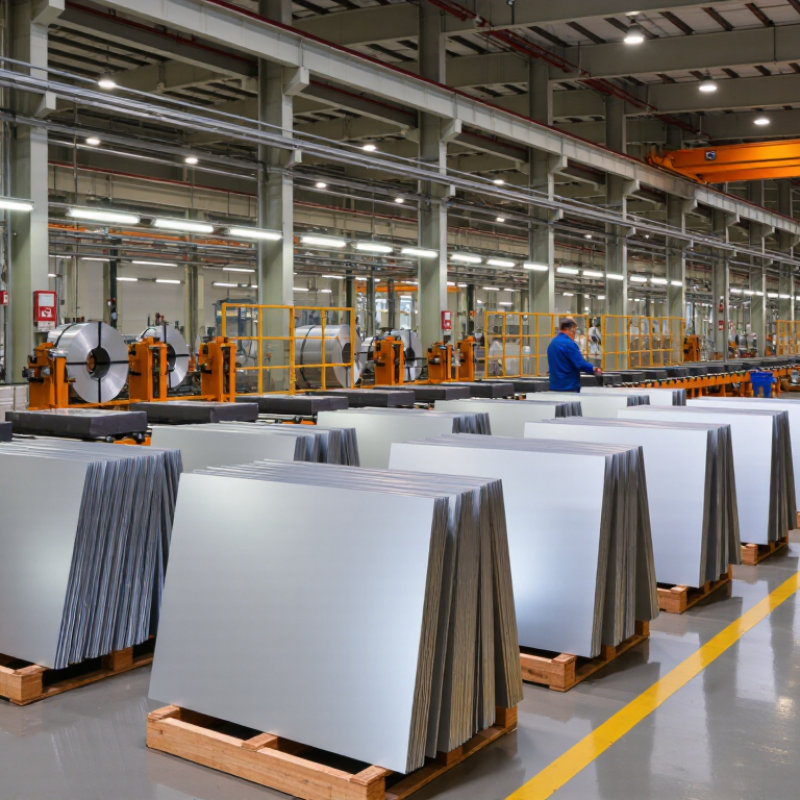
Before comparing an aluminum composite panel exporter, define the project’s actual performance requirements. Record panel thickness, aluminum skin thickness, core type, coating system, color, maximum dimensions, and installation method. Do not accept “standard panel” as a complete specification.
Exterior façades may face strong wind, rain, ultraviolet exposure, and coastal salt. Request tested values for wind pressure, peel strength, impact resistance, water tightness, and coating durability. Fire classification must match the project’s local code and façade design. Ask for complete laboratory reports, not isolated certificates.
The 2023 Buildings Global Status Report from UNEP and the IEA states that buildings consume about 30% of global final energy and produce around 26% of energy-related emissions. Therefore, thermal performance and building orientation deserve attention, even when panels are mainly decorative. Energy savings should not be claimed without system-level calculations.
Specify tolerances for flatness, color variation, joint width, and cut dimensions. Include sample approval before mass production. In practical project reviews, small errors often appear at corners, returns, and fixing zones. They are easy to overlook. A slightly thicker panel may improve rigidity, but it can increase transport weight and installation loads. I have seen specifications copied from another project without checking local wind conditions. That shortcut can create expensive revisions. Require traceable batch records, pre-shipment inspection, installation guidance, and a written response to every technical requirement.

Choosing an aluminum composite panel exporter requires evidence, not attractive brochures. Ask how many years the exporter has supplied overseas projects. Request three recent references, shipment records, and photos showing panels in use. Experience should include similar climates, thicknesses, coatings, and fire-performance requirements.
Certification needs careful checking. A valid ISO 9001 certificate shows a quality-management system, but it does not automatically prove panel performance. The 2023 ISO Survey recorded 1,265,216 ISO 9001 certificates worldwide. That scale makes verification essential. Confirm the certificate number, issuing body, factory address, and expiry date. Request test reports for coating adhesion, peel strength, fire reaction, and weather resistance. Reports should identify the exact core and panel construction. Generic documents are weak evidence.
Production capacity must be measurable. Ask for monthly output, available production lines, lead times, inspection procedures, and backup arrangements. The International Aluminium Institute reported about 70.6 million tonnes of global primary aluminium production in 2023. Material availability does not guarantee consistent panel quality. Review batch records and visit the factory, if possible. I would not rely on capacity claims alone.
Tips: Compare the stated capacity with recent export volumes. Check whether certificates cover the actual production site. Keep one approved sample for every contract. Small details matter. Mistakes happen.
A reliable exporter should prove panel quality with current test reports, not attractive samples alone. Check the aluminum skin thickness, alloy grade, coating system, core composition, and bonding strength. These details affect bending, weather resistance, and long-term appearance. Request batch-specific certificates, not generic documents.
Fire performance needs careful verification. EN 13501-1 classifies reaction to fire, while ASTM E84 measures flame spread and smoke-developed indexes. However, one test cannot represent every wall assembly. Ask whether the tested panel matches the proposed thickness, core, joint design, and installation method. The 2024 Grand View Research analysis estimated the global aluminum composite panel market at several billion U.S. dollars, showing strong demand but also greater quality variation. Market growth is not proof of technical reliability.
Look for ISO 9001-based production controls, dimensional inspection records, and coating test results. Useful evidence includes color retention, adhesion, impact, and corrosion testing under recognized methods. The Aluminum Association reports that aluminum remains highly recyclable, but recyclability depends on separating the composite layers. That detail is often overlooked. A supplier may provide impressive certificates, yet poor storage can still cause moisture marks, dents, or edge damage. Inspect packaging, pallet protection, and loading photographs. No panel is perfect. The exporter should explain limitations clearly, correct failed batches, and provide installation data that engineers can verify.
Choosing an aluminum composite panel exporter requires more than comparing the lowest quote. Ask for a detailed price breakdown covering panel thickness, core type, coating, cutting, packing, and delivery. A cheap offer may exclude protective film or export-grade packaging. Request a sample panel and check its flatness, color consistency, surface finish, and edge quality. Small differences become obvious on a large facade.
Customization should match your project drawings, not only a sales catalog. Confirm available panel sizes, colors, textures, bending limits, perforation accuracy, and fire-performance documentation. An experienced exporter should explain technical limits clearly and provide production samples before approval. Be cautious with promises that sound too perfect. Some specifications may need revision after testing. That is normal, but it should be documented.
Tips: Compare shipping services by total landed cost, not freight alone. Check the loading port, estimated transit time, insurance terms, pallet design, and tracking process. Ask whether panels are separated with foam or protective sheets. Verify the exporter’s quality records, factory capacity, inspection process, and response time. A dependable supplier sends consistent documents, answers detailed questions, and identifies risks before production. One overlooked detail can delay installation for weeks.
Choosing an aluminum composite panel exporter requires more than comparing unit prices. Review the contract line by line. It should define alloy grade, panel thickness, coating system, color tolerance, flatness, packaging, inspection, and Incoterms. Ask for a measurable acceptance standard, not vague phrases like “premium quality.” The World Bank’s 2023 Logistics Performance Index evaluates customs, infrastructure, tracking, and timeliness. These factors can affect delivery reliability, even when production quality is strong.
Communication reveals operational maturity. Request one responsible contact and a written response target for technical questions. Shared drawings, revision numbers, and approval records can prevent costly mistakes. In my project experience, small changes to panel dimensions often created large installation delays. I also learned that fast replies do not always mean accurate replies. Require test reports, coating data, and pre-shipment photographs before payment milestones. UNCTAD’s 2023 Review of Maritime Transport reports that ships carry over 80% of global merchandise trade by volume, so shipping risks deserve clear contractual treatment.
Tips: Add a claim procedure with deadlines, evidence requirements, and replacement terms. Confirm who pays for defective panels and inland transport. After-sales support should include installation guidance, batch traceability, and a practical warranty process. Ask whether the exporter can supply matching panels later, because color differences may appear between production batches. Keep every promise in writing. A friendly call is useful, but it is not a contract.
| Category | Evaluation Dimension | What to Verify | Recommended Benchmark | Risk Signal | Weight |
|---|---|---|---|---|---|
| Contract | Product specification accuracy | Confirm alloy, panel thickness, aluminum skin thickness, core type, coating system, finish, dimensions, tolerances, color reference, and packing method in the signed quotation and sales contract. | Every technical parameter is written in measurable units, including millimeters, coating thickness, tolerance limits, and applicable test methods. | The contract uses broad descriptions such as “standard quality” without defining the panel construction or acceptance criteria. | 15% |
| Contract | Technical compliance and documentation | Request current technical data sheets, safety data where applicable, factory quality records, and test reports that identify the tested product construction. | Test evidence is traceable to the quoted product and uses a recognized method, such as ASTM E84 for surface burning or EN 13501-1 for reaction-to-fire classification, where relevant to the project. | A certificate is supplied without a product description, test date, laboratory information, or connection to the ordered specification. | 12% |
| Contract | Quality acceptance terms | Check inspection stages, sample approval, allowable color variation, flatness, dimensional tolerance, defect definitions, inspection responsibility, and claim deadlines. | Acceptance criteria are agreed before production, with a documented process for pre-shipment inspection and nonconforming goods. | Payment is due before inspection, while the contract does not define how defects, shortages, or replacement costs will be handled. | 12% |
| Contract | Warranty scope and duration | Review the warranty start date, covered defects, exclusions, claim procedure, required installation conditions, remedy options, and freight responsibility. | The warranty clearly distinguishes manufacturing defects from installation, substrate, handling, cleaning, weather, and chemical-exposure issues. | The exporter advertises a long warranty period but provides no written exclusions, claim procedure, or remedy commitment. | 10% |
| Communication | Response speed and consistency | Record response times during quotation, sampling, technical clarification, and order changes. Compare answers from sales, technical, and production contacts. | Routine questions are answered within one business day, while technical or production questions receive a documented response within two business days. | Different contacts provide conflicting specifications, prices, lead times, or explanations for the same product. | 10% |
| Communication | Technical consultation | Ask about project location, building use, fire requirements, wind exposure, panel application, fabrication method, and installation environment. | The exporter asks project-specific questions instead of recommending one standard panel for every application. | The exporter promises suitability without reviewing drawings, local regulations, installation details, or environmental conditions. | 9% |
| Communication | Sample and color control | Verify sample size, color reference, gloss level, surface direction, protective film, batch identification, and approval records. | A signed or digitally recorded sample approval is linked to the production order and retained for comparison during inspection. | The supplier treats a small color image or informal message as the final color approval. | 7% |
| Communication | Schedule transparency | Request a production schedule covering raw-material confirmation, sample approval, manufacturing, inspection, packing, and shipment. | Lead time is stated separately from transit time, with written notice requirements for delays or changes. | The exporter gives only an estimated shipping date and cannot explain production capacity or critical-path activities. | 8% |
| After-Sales | Claims and corrective action | Confirm the claim submission channel, required photographs and batch information, investigation timeline, corrective-action report, and replacement or credit process. | Complaints are acknowledged promptly, investigated using shipment and batch records, and resolved through a documented corrective-action process. | The exporter requires extensive evidence but provides no response deadline or written resolution process. | 7% |
| After-Sales | Replacement and spare-panel policy | Ask whether replacement panels can match the original color, finish, thickness, and production batch, and who pays transportation and rework costs. | The policy addresses manufacturing defects, transit damage, shortages, and incorrect specifications separately. | The exporter offers replacement only as a future purchase and does not define responsibility for installation delays or rework. | 5% |
| After-Sales | Installation and maintenance guidance | Review installation instructions, recommended fasteners and sealants, protective-film removal guidance, cleaning methods, and storage requirements. | Guidance covers handling, storage, cutting, joint treatment, cleaning, and substances that may damage the coating or core. | The exporter provides panels without application guidance and rejects all claims related to installation or maintenance. | 5% |
| Score | Interpretation | Suggested Decision |
|---|---|---|
| 5 | Evidence is complete, product-specific, current, and contractually enforceable. | Preferred supplier for further commercial negotiation. |
| 4 | Most requirements are satisfied, with minor documentation gaps. | Suitable after closing the identified gaps in writing. |
| 3 | Basic information is available, but important terms require clarification. | Proceed cautiously and request additional evidence. |
| 2 | Several claims are verbal, generic, or difficult to verify. | Use stronger contractual controls or consider alternatives. |
| 1 | Critical specifications, warranty terms, or support procedures are absent. | High-risk option; avoid commitment until corrected. |
Whether you’re looking for fire-rated walls, doors, openings, floors or a specialty service, we have the solution for you. With over 40 years of experience in testing, innovating, and providing technologically advanced fire-rated glass and framing products, we deliver unyielding performance and quality at a competitive price.
