How to Choose the Right Battery Connector for Your Needs?
Choosing the right Battery Connector is crucial in various applications, from powering electric vehicles to ensuring the functionality of consumer electronics. According to John Smith, a renowned expert in the battery technology industry, "The right connector can make or break the efficiency of your power system." This statement highlights the importance of selecting connectors that suit your specific needs.
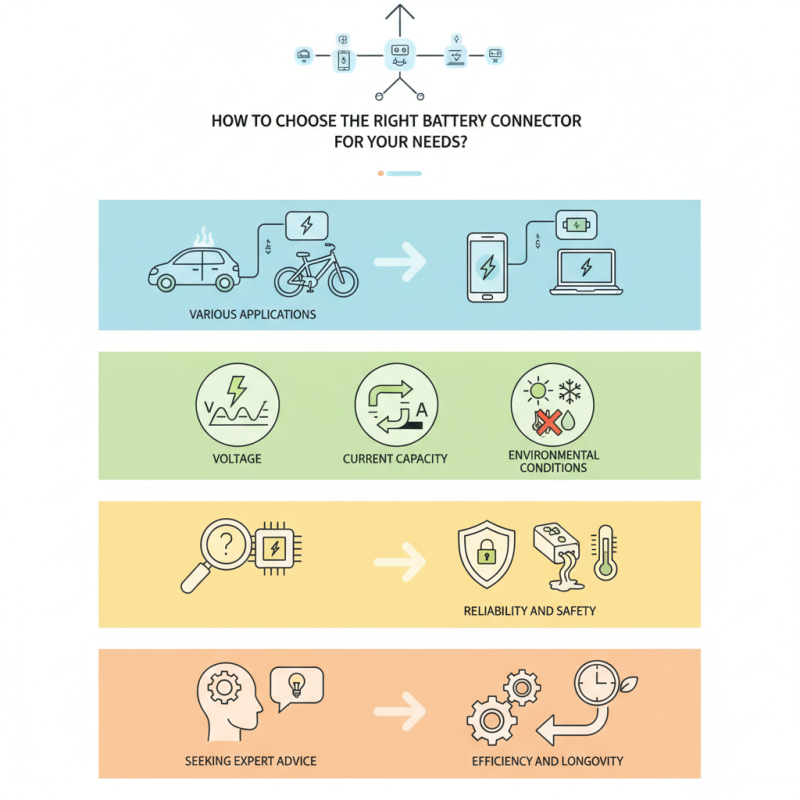
Battery Connectors come in various types and specifications. Factors such as voltage, current capacity, and environmental conditions are essential to consider. A poorly chosen connector can lead to overheating or even failure in electronic devices. It is vital to match the connector with the battery type and the application it serves.
Manufacturers sometimes provide ambiguous information about their products. Users should do thorough research before making a decision. Reliability and safety should always be at the forefront. Thus, seeking expert advice can provide deeper insights into the suitability of different battery connectors for a project. Choosing wisely ensures efficiency and longevity in your applications.
Understanding Different Types of Battery Connectors
When selecting battery connectors, it’s crucial to understand the diverse types available. Battery connectors facilitate the connection between batteries and devices, impacting overall performance. According to recent industry reports, approximately 30% of device failures stem from poor connector choices.
There are several common types of battery connectors, including the Anderson Powerpole and Deans connectors. Powerpole connectors are known for their modular design, allowing customization. In contrast, Deans connectors are favored for high-discharge applications. Each type serves specific needs, influencing efficiency and reliability. Data shows that proper connector choice can boost energy efficiency by up to 15%, making informed selection essential.
However, not all connectors are suitable for every application. Some connectors can be cumbersome due to their size. For instance, larger connectors might complicate compact designs. Sometimes, users choose connectors based on familiarity rather than performance. This can lead to dissatisfaction and project delays. Overall, understanding various connectors is vital for making confident decisions.
Evaluating Current and Voltage Requirements for Your Application
When selecting a battery connector, evaluating current and voltage requirements is crucial. Voltages can vary widely depending on your application. For instance, small electronic devices often require low voltage, while power tools or electric vehicles need much higher voltage levels. It's essential to match the connector's voltage rating with your device’s needs.
Current ratings play a vital role as well. Connectors can handle different amounts of current, so knowing your device's requirements ensures optimal performance. Choose a connector that exceeds your device's current needs to avoid overheating or failure.
Tip: Always consider the worst-case scenario. If your application may draw higher current at certain times, opt for a connector with a higher rating.
Another factor to ponder is connector size and type. Larger applications might dictate larger connectors that can handle more significant loads. However, these come with bulk and weight, which may not suit smaller projects. Balancing size and functionality is key; avoid overengineering your selection, but don't go too small either.
Tip: Test connectors under load to see how they perform. This practical action can reveal issues that specifications alone might not.
Considering Environmental Factors and Connector Durability
When selecting a battery connector, environmental factors are paramount. Connectors face diverse conditions, including temperature fluctuations and moisture. According to a report by Frost & Sullivan, connectors can experience a 30% reduction in performance under extreme conditions. This highlights the need for durability in connector choice.
Materials used in connectors not only affect performance but also longevity. For example, connectors made with corrosion-resistant coatings can last five times longer in humid environments. A study by the International Electrotechnical Commission (IEC) suggests that connectors in outdoor applications should withstand UV exposure for over 1000 hours. This statistic underlines the importance of testing against environmental stressors.
On the other hand, many manufacturers overlook the long-term effects of harsh conditions. Making a choice based solely on initial performance can lead to premature failures. An estimated 20% of electronic device failures result from connector issues. Deliberate consideration of environmental factors, therefore, can help ensure your battery connectors remain reliable throughout their lifecycle. It’s essential to reflect on these aspects seriously.
Battery Connector Durability Comparison
Assessing Compatibility with Existing Equipment and Systems
When selecting a battery connector, compatibility with existing equipment is crucial. An industry report from the Battery University indicates that nearly 70% of failures in electronic devices stem from poor connections. Ensuring your connector matches the voltage and amperage specifications of your system can prevent these costly issues.
Evaluate the dimensions and pin configurations of your current connectors. In a recent analysis, it was found that mismatched sizes lead to significant operational inefficiencies. A connector that does not fit properly can increase wear and tear on both the connector and the device. Consider using connectors that have been standard in the industry for years. They tend to offer reliable performance and are widely supported.
However, not every application will use standardized connectors. Custom solutions might be necessary, but they come with risks. Thorough testing is vital to prevent failures. Over 30% of engineers reported experiencing challenges when integrating custom connectors, often due to lack of available data. Assessing all these factors can lead to a more informed choice in battery connectors, ultimately enhancing system stability.
How to Choose the Right Battery Connector for Your Needs?
| Connector Type | Voltage Rating | Current Rating | Compatibility | Typical Applications |
| Anderson Powerpole | Up to 600V | Up to 50A | Wide compatibility with amateur radio and RC applications | Battery packs, solar panels, chargers |
| XT60 | Up to 60V | Up to 60A | Commonly used in hobbyist applications | RC vehicles, drones, electric bikes |
| Molex Connector | Up to 250V | Varies (typically 10A - 30A) | Widely used in electronics and appliances | Computers, consumer electronics, appliances |
| Deans Connector | Up to 60V | Up to 90A | Popular in high-current applications | RC racing, electric power systems |
| DC Power Jack | Up to 12V | Varies (typically 2A - 5A) | Common in consumer electronics | Adapters, chargers, small devices |
Exploring Safety Features and Standards for Battery Connectors
When selecting battery connectors, safety features are paramount. High-quality connectors should have robust insulation to prevent short circuits. Look for connectors that meet recognized safety standards. These standards ensure reliability and minimize risks. Some common certifications include UL, IEC, and ISO. This makes sure the connectors can handle various environmental conditions.
Consider the design of the connector as well. Features like locking mechanisms help prevent accidental disconnections. These small details significantly enhance user safety. Assess the current and voltage ratings too. Using connectors that exceed requirements can prevent overheating and failures.
There are times when even with the right connectors, issues can arise. Improper installation or environmental factors can lead to unexpected failures. Regular inspections and maintenance are crucial for long-term safety. Reflect on the overall system design to ensure compatibility. Taking these aspects into account will lead to better choices for your specific needs.