- Proudly Made in the USA

Fire safety glass is designed to protect people, property, and escape routes during a fire. It is not ordinary window glass with a stronger label. Its performance depends on its construction, thickness, framing system, and tested installation.
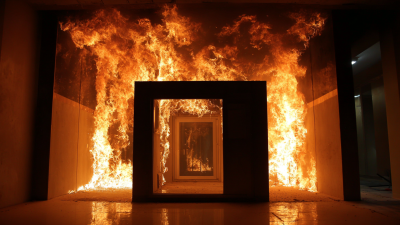
When exposed to intense heat, some fire safety glass types resist cracking for a specified period. Others also limit heat transfer, smoke movement, or the spread of flames. Wired glass, ceramic glass, and laminated intumescent glass work in different ways. Intumescent layers expand when heated, forming an opaque, insulating barrier. The glass may cloud before the fire reaches the protected space. That change is intentional.
It looks simple.
In real projects, selecting the correct product requires more than reading a product name. Architects, glaziers, and fire safety professionals should review test reports, approved frame combinations, and required ratings. A fire-rated pane can fail if it is installed in an unsuitable frame or with incorrect seals. Small gaps around the edges may become dangerous paths for smoke and heat.
This article explains what fire safety glass is and how it works under fire conditions. It also examines common types, testing principles, practical applications, and installation limitations. The term “fire-resistant” can sound reassuring, perhaps too reassuring. Performance always depends on the complete tested assembly, not the glass alone. Reliable decisions should follow manufacturer instructions, qualified professional advice, and applicable local building requirements. Even experienced teams can overlook compatibility details. That is why careful verification remains essential.
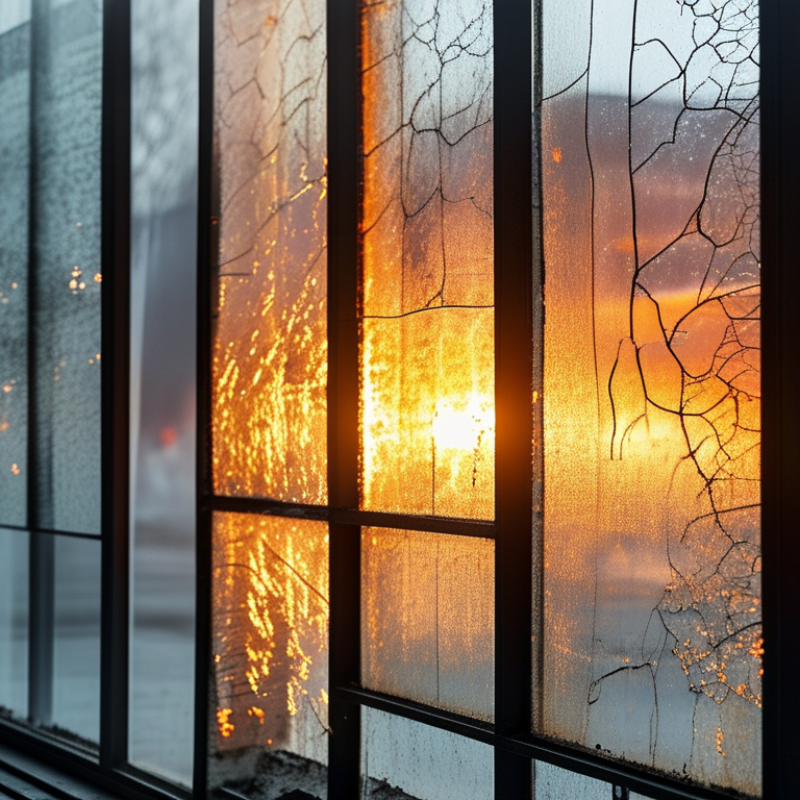
Fire safety glass is specially tested glazing designed to slow the spread of flames, smoke, and heat. Ordinary glass can crack quickly under thermal stress. Fire-rated glass uses materials such as ceramic layers, intumescent interlayers, or specially treated glass. Some products maintain visibility, while others become opaque as heat rises.
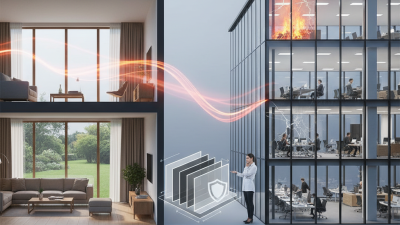
The National Fire Protection Association reported about 1.5 million fires in the United States during 2022. That year, fires caused approximately 3,790 civilian deaths and 16,700 injuries. These figures show why transparent fire barriers matter in corridors, stairwells, doors, and compartment walls. Fire safety glass can preserve separation while allowing daylight and visibility.
The term sounds simple. It is not.
A common mistake is judging the glass alone. The frame, seals, setting blocks, and installation method must also pass the required fire test. Standards such as ASTM E119 and EN 13501-2 evaluate performance over defined periods. “60-minute glass” does not mean every installation provides identical protection. That assumption needs questioning. The final rating depends on the complete tested assembly, the expected heat exposure, and whether insulation or integrity is required. NFPA research also emphasizes that building design and compartmentation influence fire outcomes, not one material acting alone.
Fire safety glass is specially tested glazing designed to resist fire for a specified period. Common ratings indicate how long a tested glass-and-frame assembly can maintain its required fire performance.
The durations shown are commonly specified fire-rating periods. Actual performance depends on the complete tested glazing assembly, including the glass, frame, seals, and installation method.
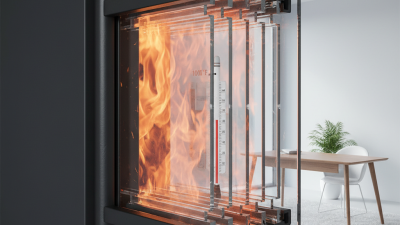
Fire safety glass is designed to slow the spread of heat, flames, and smoke during a fire. Its performance depends on its construction and tested rating. Some types contain a clear, heat-reactive layer between glass panels. When exposed to intense heat, this layer expands and turns opaque. It helps block radiant heat and protects people moving through nearby areas.
Ordinary glass can crack quickly when one side becomes much hotter than the other. Fire safety glass is engineered to manage this stress more effectively. Its frame, seals, and installation method also matter greatly. A strong pane can still fail if it is fitted into an unsuitable system. From practical inspections, small gaps around the frame often deserve more attention than expected. Fire resistance is not absolute. Ratings usually describe a tested period, such as 30, 60, or 90 minutes, under specific conditions.
Tips: Check the required fire rating before choosing glass. Confirm that the frame and glazing seals match the tested assembly. Keep labels and installation records available for future inspections. Never assume thicker glass automatically provides better fire protection. Heat can travel through surrounding walls, doors, and hardware as well. That detail is easy to overlook. Consult a qualified fire-safety professional when the glass protects escape routes or separates occupied spaces.
What Is Fire Safety Glass and How Does It Work?
The Main Types of Fire Safety Glass
Fire safety glass is specially tested to resist flames, heat, smoke, or radiant heat for a stated period. It does not remain completely unaffected. Instead, its construction slows fire spread and protects escape routes. In real projects, the glass works as part of a tested frame, seal, and wall system. A strong pane can still fail when installed incorrectly.
Wired glass is an older type with a metal mesh inside. The mesh helps hold fragments together after cracking, but it does not make the glass fireproof. Ceramic fire glass offers high resistance to heat and sudden temperature changes. It often appears in doors, partitions, and viewing panels near intense heat. However, its appearance may differ from ordinary architectural glass.
Laminated fire-rated glass contains special interlayers that expand or harden during a fire. These layers can block flames and smoke while keeping broken pieces attached. Insulated fire-resistive glass uses multiple panes and sealed spaces to reduce heat transfer. It can protect people on the opposite side from dangerous temperatures. The correct type depends on the required rating, opening size, and location.
Labels alone are not enough. Fire-protection and fire-resistance ratings measure different performance levels. A trained professional should check test reports and installation details before selection. I have found that project teams sometimes focus on appearance first. That choice can create expensive revisions later. Safety needs more careful attention.
Fire safety glass is engineered to limit fire, smoke, heat, or radiant energy moving through an opening. Its performance depends on the glass, frame, seals, and installation. A strong pane can still fail when fitted incorrectly.
Fire ratings are usually expressed in minutes, such as 30, 60, or 120 minutes. Under EN 13501-2, E indicates integrity, while EI also requires insulation. EW addresses radiant heat control. In North American projects, ASTM E119 and NFPA 257 testing commonly support fire-window and glazing evaluations. These tests examine heat exposure, flame passage, and sometimes hose-stream resistance. The rating is not a permanent guarantee.
That distinction matters. The National Fire Protection Association reported about 1.5 million fires in the United States during 2022, causing thousands of civilian deaths and billions of dollars in property loss. In a real building, smoke movement and heat transfer can change quickly. A glass panel rated for 60 minutes may not protect an incompatible wall assembly. This is often overlooked. Designers should verify the complete tested assembly, including glazing thickness, frame type, edge clearances, and approved fixing methods. Local codes also define where each rating is acceptable. A certificate alone may be insufficient. Reviewers should question missing test conditions, outdated documentation, and unclear maintenance duties. Fire protection is a system, not merely a number printed on glass.
| Data Dimension | Verified Information | Why It Matters | Relevant Standards or Terms |
|---|---|---|---|
| Definition | Fire safety glass is glazing that has been tested as part of a specific window, door, partition, or curtain-wall assembly to resist fire, limit heat transfer, or both. | The glass alone is not normally the complete fire-rated system. The frame, glazing materials, seals, and installation method must also be compatible with the tested assembly. | Fire-rated glazing; fire-resisting glazing; listed glazing assembly |
| How it works | Depending on its construction, fire safety glass may retain integrity, reduce radiant heat transmission, limit temperature rise on the protected side, or combine all three functions. | These functions help prevent flames, hot gases, and excessive radiant heat from spreading through protected openings. | Integrity, radiation control, and insulation performance |
| Common construction types | Typical products include specially formulated ceramic glass, laminated glass with fire-resistant interlayers, and multi-layer or gel-filled glazing systems. Some wired products are also tested for particular applications. | Different constructions provide different combinations of impact resistance, visibility, insulation, and fire performance. | Ceramic; laminated; intumescent; multi-layer; wired glazing |
| Fire-protection rating | Fire-protection glazing is commonly available with ratings such as 20, 45, 60, 90, and 120 minutes, depending on the tested product and assembly. | It is generally used where the primary requirement is to stop flames and hot gases and, for some products, to control radiant heat. | ASTM E2010; ASTM E2074; UL 9; UL 10C; NFPA 257 |
| Fire-resistance rating | Fire-resistive glazing is designed to provide integrity and insulation performance for the specified duration. Ratings may include 60, 90, 120, and 180 minutes where tested and approved. | It is selected when the glazing must perform more like a section of a fire-resistance-rated wall or partition, not merely close an opening. | ASTM E119; ASTM E2307; UL 263; EN 13501-2 |
| European classification | European classifications use letters such as E, EW, and EI followed by a time in minutes. E indicates integrity, EW indicates integrity plus radiation control, and EI indicates integrity plus insulation. | The classification identifies which fire-performance functions are demonstrated and for how long. | Examples: E 60, EW 60, EI 60; EN 13501-2; EN 1634-1 |
| Integrity performance | Integrity means the glazed assembly resists flames and hot gases passing through the exposed face for the tested period. | Integrity is essential for slowing fire spread through doors, windows, screens, and partitions. | E classification; furnace exposure; flame and hot-gas passage criteria |
| Insulation performance | Insulation performance limits heat transfer to the unexposed side of the assembly during the specified test period. | It helps protect occupants and combustible materials located near the non-fire side of the glazing. | I classification; temperature-rise criteria; EN 1364 series |
| Radiation control | Radiation-control glazing limits heat radiation through the assembly but may not provide the same insulation level as EI-rated glazing. | It can reduce the risk of ignition or injury near the protected side when full insulation is not required. | EW classification; radiant heat transmission assessment |
| Testing conditions | Fire tests expose the complete assembly to a controlled furnace time-temperature curve. The result applies only within the scope of the tested configuration. | Changing the frame material, glass thickness, maximum pane size, glazing bead, sealant, or installation details can invalidate the rating. | ASTM E119; ASTM E2307; EN 1363-1; EN 1634-1 |
| Maximum size and orientation | Permitted pane dimensions, aspect ratio, framing condition, and vertical or horizontal orientation are determined by the individual test report or listing. | A product approved for a small vertical window may not be approved for a larger pane, rooflight, floor system, or horizontal application. | Test report limitations; approved glazing dimensions; application scope |
| Safety glass versus fire-rated glass | Tempered or laminated safety glass may reduce injury from impact, but it is not automatically fire-rated. Fire performance must be demonstrated by the applicable fire test. | Impact-safety compliance and fire-resistance compliance address different hazards and may both be required. | Safety glazing requirements; fire-resistance test listing |
| Selection principle | The required rating is determined by the building code, wall or door rating, opening-protection requirements, occupancy, location, and size of the opening. | The correct glass must match the required fire duration and performance function rather than being selected by appearance or thickness alone. | Applicable building code; fire door and partition requirements; approved listing |
Note: Fire-rating values apply to tested and listed assemblies. Always verify the applicable building code, test report, glazing size, frame system, and installation requirements before specifying or installing fire safety glass.
What Is Fire Safety Glass and How Does It Work?
Fire safety glass is specially tested glazing designed to slow fire, smoke, or heat movement. Its performance depends on the complete assembly, not the glass alone. A rated product may provide integrity, insulation, or both. Integrity helps block flames and smoke. Insulation limits heat transfer to the protected side.
Common uses include fire-rated doors, corridor screens, stairwell windows, elevator lobbies, and internal partitions. These areas need daylight and visibility without creating an easy path for fire. Installation must follow the tested system’s requirements. The frame, glazing beads, setting blocks, seals, and fixing method should match the approved specification. A small gap or unsuitable seal can weaken the entire barrier.
Check the required fire rating before ordering. Ratings may differ between doors, partitions, and façade applications. The installer should confirm the glass orientation, maximum panel size, edge clearances, and frame compatibility. Labels and product records should remain available for inspection. Local building regulations and the project’s fire strategy also control the final choice. Cutting or modifying rated glass on site is usually unsafe and may invalidate its tested performance.
Tips: Ask for test evidence and installation instructions. Inspect joints carefully. Do not assume ordinary tempered glass offers fire protection. A practical review should include the frame and surrounding wall, because the glass is only one part of the barrier. Mistakes often happen when appearance receives more attention than the tested assembly.
Whether you’re looking for fire-rated walls, doors, openings, floors or a specialty service, we have the solution for you. With over 40 years of experience in testing, innovating, and providing technologically advanced fire-rated glass and framing products, we deliver unyielding performance and quality at a competitive price.