- Proudly Made in the USA

Choosing the right Electrical Enclosure in 2026 starts with the conditions around it, not just the equipment inside. A cabinet beside a washdown line faces different risks from one mounted in a clean control room. Heat, dust, moisture, vibration, corrosion, and service access all shape the choice. So does the installation itself. A door that clears the wall today may block a maintenance route tomorrow.
Electrical enclosure design specialist Elena Park puts the principle simply: “Choose the enclosure for the environment it must withstand, not only for the components it must contain.” That is a useful starting point, though no single rating answers every question. An IP rating describes protection against dust and water under defined test conditions; it does not, by itself, settle temperature, chemical exposure, or corrosion concerns. Check the product documentation and applicable project requirements before comparing models.
This guide outlines how to assess materials, enclosure ratings, dimensions, thermal management, cable entry, and maintenance needs. Expect trade-offs. Stainless steel may suit a corrosive setting, while a lighter material may be easier to handle. A tighter seal can reduce ingress, but it can also make heat management more demanding. Small details matter: a gland plate, mounting clearance, or awkward latch can affect installation and upkeep. It is easy to overlook one. The best selection is the one that fits the actual site, protects the equipment, and remains practical to service.
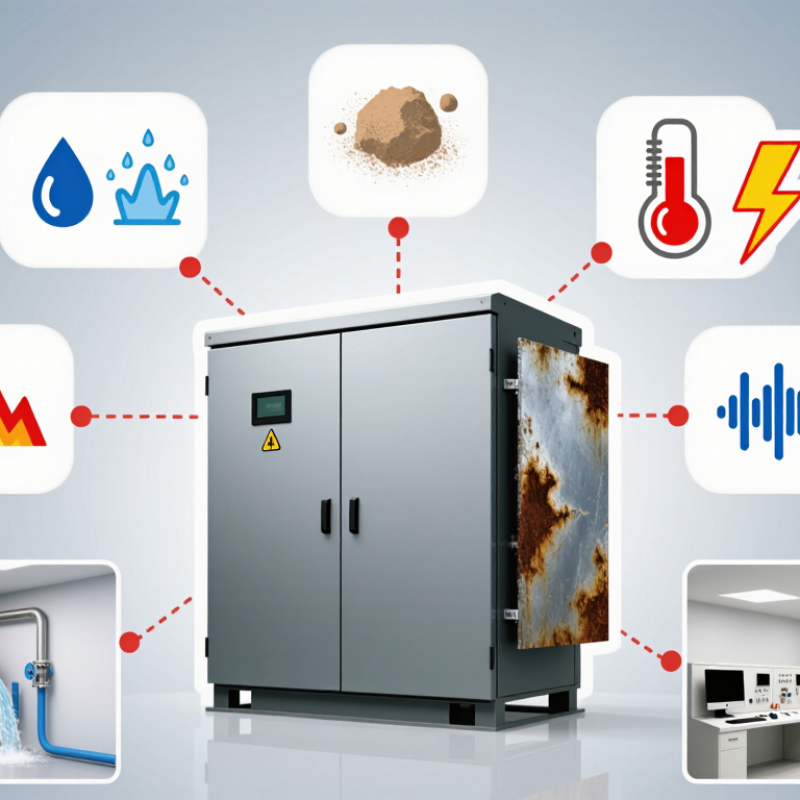
Before selecting an electrical enclosure, define the equipment’s actual electrical requirements. Record operating voltage, maximum current, fault levels, wiring methods, and heat generated by internal components. Do not rely on typical values from an old project file. Measure twice. A small error in load estimation can create overheating, nuisance trips, or difficult maintenance later.
Environmental conditions matter just as much. Identify whether the enclosure will sit indoors, outdoors, near washdown areas, or in a dusty production space. Check ambient temperature, humidity, ultraviolet exposure, corrosion risks, and possible impact from tools or vehicles. Specify the required ingress protection level and confirm that cable glands, door seals, and unused openings provide the same protection. Field inspections often find a strong enclosure weakened by one poorly sealed entry point.
Operational requirements should reflect daily use, not only installation day. Define access frequency, lockout needs, viewing requirements, ventilation, internal clearance, and future circuit expansion. Maintenance staff may need insulated tools and enough room to test terminals safely. A compact design can look efficient, but cramped wiring increases inspection time and mistakes. Review heat dissipation with a qualified electrical professional, especially when drives, transformers, or power supplies share one cabinet. Some assumptions will be wrong. Record them, test critical conditions, and revise the specification before ordering.

An enclosure should fit its surroundings, not just the equipment inside. Start with the expected hazards: dust, water, chemicals, impact, heat, and condensation. IEC 60529 defines IP ratings, while NEMA 250 classifies protection against corrosion, hose-directed water, and outdoor conditions. An IP65 enclosure may resist dust and water jets, but it does not automatically address every corrosion risk.
Outdoor installations need careful inspection. A rooftop cabinet may face sunlight, driving rain, salt air, and rapid temperature changes. In a washdown area, water pressure and cleaning chemicals matter more than appearance. In dusty production spaces, small gaps can become failure points. The U.S. Bureau of Labor Statistics reported 145 fatal occupational injuries involving electricity in 2022. That figure reinforces a practical lesson: enclosure selection supports, but never replaces, safe design and maintenance.
Check the rating on the complete assembly. Cable glands, hinges, door seals, and unused openings can reduce real-world protection. I have seen technically correct specifications fail after poor cable entry installation. That detail is easy to underestimate. Temperature also deserves attention, because sealed cabinets can trap heat and shorten component life. The 2024 International Energy Agency electricity report projects strong global demand growth, increasing pressure on electrical infrastructure. Higher equipment density may require ventilation, cooling, or a larger enclosure. Recheck the environment after installation; the original survey may be incomplete.
Choosing the right electrical enclosure starts with its environment, not its appearance. In field inspections, corrosion often reveals the wrong material choice. Stainless steel suits damp, salty, or chemically exposed areas. Coated carbon steel works well indoors when moisture remains controlled. Polycarbonate resists impact and does not conduct electricity. Fiberglass performs reliably outdoors, especially where corrosion is a concern. No material fits every site.
Construction quality matters just as much. Look for folded seams, strong hinges, and a gasket that compresses evenly. A poorly fitted door can defeat a high ingress rating. Check the enclosure’s IP or NEMA classification against dust, water, and cleaning conditions. Small details matter. Drainage points can prevent trapped condensation. UV-resistant finishes help outdoor surfaces retain strength. Thermal expansion also deserves attention around cable entries.
I have seen durable enclosures fail because installers ignored mounting stress. A heavy cable bundle can twist a thin wall over time. Use suitable glands, supports, and fasteners for the enclosure material. Avoid drilling near hinges or gasket channels. Inspect seals after installation, then repeat checks during maintenance. My own early selections sometimes focused too heavily on ratings and overlooked access space. That mistake is easy to repeat. Leave room for bending cables, testing terminals, and replacing components without damaging the enclosure.
| Enclosure Material | Typical Density | Corrosion Resistance | UV and Weathering Performance | Impact Performance | Typical Service Temperature Range | Recommended Construction Features | Suitable Applications | Important Selection Considerations |
|---|---|---|---|---|---|---|---|---|
| 304 Stainless Steel | Approximately 7.9 g/cm³ | Very good in indoor, humid, and general outdoor environments | Excellent; does not degrade from sunlight in the same way as many polymers | High resistance to impact, abrasion, and mechanical damage | Commonly suitable from approximately −40°C to 100°C, depending on seals and components | Welded or folded body, continuous hinge, concealed fasteners, raised cover, and replaceable gasket | Industrial control panels, food-processing areas, utilities, and general outdoor installations | May stain or corrode in high-chloride or marine environments; select 316 stainless steel for stronger chloride resistance |
| 316 Stainless Steel | Approximately 8.0 g/cm³ | Excellent resistance to chlorides, salt spray, and many chemical environments | Excellent for long-term outdoor exposure | High resistance to impact, abrasion, and mechanical damage | Commonly suitable from approximately −40°C to 100°C, depending on seals and components | Fully welded seams, sloped top, continuous gasket, corrosion-resistant hardware, and minimized dirt traps | Marine facilities, coastal infrastructure, chemical processing, wastewater treatment, and washdown areas | Higher material cost and weight; avoid crevices that can retain salt, chemicals, or cleaning fluids |
| Powder-Coated Carbon Steel | Approximately 7.85 g/cm³ | Good when the coating remains intact; vulnerable at scratches, cut edges, and penetrations | Good with a qualified outdoor powder coating; color fading can occur over time | Very good structural strength and resistance to deformation | Commonly suitable from approximately −20°C to 100°C, depending on coating and gasket selection | Multi-stage surface pretreatment, sealed seams, robust flange, drain provision, touch-up protection, and suitable coating thickness | Indoor industrial equipment, machinery controls, electrical rooms, and cost-sensitive installations | Inspect damaged coating promptly; use edge protection and corrosion-resistant fasteners in outdoor environments |
| Aluminum | Approximately 2.7 g/cm³ | Very good due to its naturally forming oxide layer | Good to excellent with anodizing or a suitable outdoor coating | Good strength-to-weight ratio; softer than steel and more vulnerable to denting or galling | Commonly suitable from approximately −40°C to 100°C, depending on seals and components | Die-cast or fabricated body, corrosion-resistant hinge, gasketed cover, reinforced mounting points, and galvanic-isolation hardware | Transport equipment, rooftop systems, instrumentation, portable equipment, and weight-sensitive installations | Prevent galvanic corrosion where aluminum contacts copper, carbon steel, or stainless steel in the presence of moisture |
| Polycarbonate | Approximately 1.2 g/cm³ | Excellent resistance to moisture and many common chemicals; compatibility must be checked for solvents | Good when UV-stabilized; standard grades may yellow or become brittle outdoors | Very high impact resistance compared with many other plastics | Commonly suitable from approximately −40°C to 120°C, depending on grade and gasket | UV-stabilized resin, molded radiused corners, stainless hardware, captive screws, and a replaceable elastomeric gasket | Outdoor instrumentation, communication equipment, low-voltage controls, and applications requiring visibility or low weight | Check UV certification, chemical compatibility, flame rating, and dimensional stability at elevated temperature |
| ABS | Approximately 1.0–1.1 g/cm³ | Good for indoor moisture exposure and many general-purpose environments | Limited unless specifically UV-stabilized; prolonged sunlight can cause fading and embrittlement | Good impact resistance for indoor applications | Commonly suitable from approximately −20°C to 80°C, depending on grade | Ribbed molded body, positive cover engagement, gasketed joint, reinforced mounting bosses, and flame-rated resin where required | Indoor control devices, building automation, telecommunications, and protected electrical assemblies | Usually not the first choice for direct sunlight, high heat, severe chemicals, or heavy mechanical abuse |
| Glass-Fiber-Reinforced Polyester | Approximately 1.5–2.0 g/cm³ | Very good resistance to moisture, many chemicals, and corrosion | Good to excellent when formulated with UV stabilizers and an outdoor finish | High impact and stiffness performance; may crack if severely overloaded or improperly drilled | Commonly suitable from approximately −40°C to 120°C, depending on resin and gasket | Compression-molded body, reinforced flange, stainless hardware, smooth drainage surfaces, and replaceable gasket | Corrosive industrial sites, water treatment, transportation, outdoor distribution, and electrically harsh environments | Use proper drilling practices; verify flame performance, UV rating, and chemical compatibility for the exact resin system |
Choose the enclosure size from the equipment, wiring, and working clearances—not just the component dimensions. Measure the largest devices, then allow room for cable bends, terminals, and safe access during maintenance. Leave breathing room. Heat-producing components may need extra separation or ventilation, depending on their rated limits and the enclosure environment. A cabinet that looks spacious on a drawing can feel crowded once wires enter from below.
Plan the layout around how power and signals travel. Keep suitable separation between power wiring and sensitive control or communication circuits, following the equipment instructions. Put frequently adjusted devices where a technician can reach them without leaning over live components. Check that the door can open fully and that tools fit around terminals. That detail is easy to miss. Leave practical space for future changes, but avoid adding so much unused volume that the installation becomes unnecessarily bulky.
Mounting affects both access and reliability. A wall-mounted enclosure needs a surface that can support its loaded weight, including doors, components, and cable forces. Confirm the mounting orientation, entry points, and clearance before drilling; pipes or structural members may be hidden behind the surface. For floor-mounted units, check leveling and access for installation. I have seen neat layouts become awkward because cable entry was chosen too late. Recheck the arrangement at full scale, even if only with a cardboard template. Small details matter.
How to Choose the Right Electrical Enclosure in 2026?
In 2026, enclosure selection should begin with compliance, not appearance or price. Check local electrical codes, installation conditions, and required safety certifications before comparing materials. Confirm the enclosure’s ingress protection rating matches dust, water, cleaning, and outdoor exposure. A qualified electrical professional should verify the selection against the project’s actual risks.
Maintenance needs often become obvious only after installation. Choose a design that allows safe access to terminals, wiring, and protective devices. Leave enough working space for inspection and testing. Use clear cable labels and keep a simple maintenance record nearby. Small labels matter. Also examine hinges, seals, locks, and cable glands during scheduled inspections. A damaged seal can quietly reduce protection.
Future expansion deserves equal attention. Reserve space for additional circuits, terminals, ventilation, and cable routes. Check the enclosure’s heat limits after adding equipment, because crowded wiring can raise internal temperatures. A perfect forecast is impossible. I have seen projects outgrow a suitable enclosure within months. That lesson is easy to overlook. Review the expected load, spare capacity, and likely control changes with the design team. When conditions change, reassess compliance instead of modifying the enclosure casually.
Compare common IEC 60529 IP ratings before selecting an enclosure. Higher dust and water protection can support demanding environments, while maintenance access and spare internal capacity should also be checked for future expansion.
Reading the chart: The first IP digit rates protection against solid particles, while the second rates protection against water. IP66, for example, provides complete dust protection and protection against powerful water jets. Confirm the required rating, service access, cable-entry needs, and available space against the installation environment and applicable regulations.
Whether you’re looking for fire-rated walls, doors, openings, floors or a specialty service, we have the solution for you. With over 40 years of experience in testing, innovating, and providing technologically advanced fire-rated glass and framing products, we deliver unyielding performance and quality at a competitive price.
