Top 10 Microwave Coaxial Switches at 2026 Canton Fair?
The emergence of advanced technologies has led to significant growth in the Microwave Coaxial Switch industry. According to industry reports, the Microwave Coaxial Switch market is projected to grow at a CAGR of 8.5% from 2022 to 2026. This acceleration reflects increasing demands for high-frequency communications systems and signal management solutions.
At the upcoming 2026 Canton Fair, key players in this sector will showcase innovative designs. Industry expert Dr. James Lin once stated, “High-performance Microwave Coaxial Switches are pivotal for modern telecommunication infrastructure.” This highlights the importance of these components in facilitating seamless signal distribution.
With the fair introducing AI-driven search tools, attendees can efficiently locate top suppliers. However, the challenge remains to continuously improve and adapt to evolving technological landscapes. Emphasizing quality and compliance, like ISO and CE certifications, will be vital for organizations aiming to stand out. As we approach the event, it is essential to reflect on past innovations. The need for precision and reliability in Microwave Coaxial Switches remains a constant priority for manufacturers and users alike.
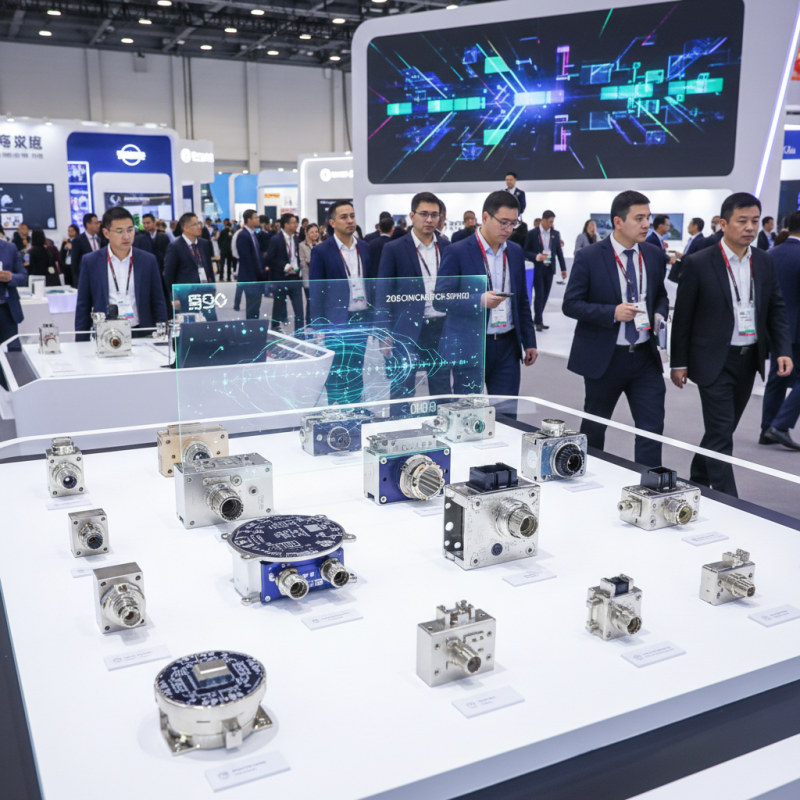
Overview of Microwave Coaxial Switches and Their Applications
Microwave coaxial switches play a vital role in modern telecommunications, radar systems, and scientific research. Their core function allows for the routing of microwave signals. In many applications, including automation and signal testing, flexibility is critical. A recent industry report indicates that the market for coaxial switches is projected to reach approximately $1.3 billion by 2026, underscoring their growing importance.
The applications are vast. Microwave coaxial switches are essential for test equipment, satellite communications, and military systems. These switches can handle frequencies up to 50 GHz or more. Yet, achieving reliability at such frequencies can be challenging. Performance degradation due to wear and environmental factors is a concern in demanding situations. Moreover, varying RF power levels can impact their lifespan, making maintenance crucial.
Switch design varies significantly. Some models prioritize speed while others focus on durability. Each approach has trade-offs. Users must balance performance with the specific needs of their projects. Precision in manufacturing is equally important. According to sector analysis, materials quality plays a significant role in minimizing signal loss. Thus, advancements in materials science are vital for improving switch performance and longevity. Addressing these challenges will shape the future landscape of microwave coaxial switches.
Top 10 Microwave Coaxial Switches at 2026 Canton Fair
This chart showcases the performance (in dB) of the top 10 microwave coaxial switches that are expected to be featured at the 2026 Canton Fair. Each switch is evaluated for its signal loss characteristics, highlighting the competitive landscape in the microwave switch market.
Key Features to Consider When Choosing a Microwave Coaxial Switch
When choosing a microwave coaxial switch, consider various key features that impact performance. The switch's frequency range is crucial. It should match your application needs. For example, a broad frequency range aids in versatility. Ensure the switch has low insertion loss. This reduces signal degradation, improving the overall system efficiency.
Pay attention to the power handling capabilities. High power ratings supply robust operation in demanding environments. Make sure to consider isolation levels. High isolation protects signals from interference. In some cases, brands might not clearly state this, leading to potential issues.
Here are some tips: Check for durability in materials. The right materials withstand harsh conditions. Don't overlook the size and footprint. Compact designs save space and simplify installation. Always think about your specific needs. Sometimes, the most complex features can be unnecessary. Evaluate each feature carefully before making a decision.
Top 10 Microwave Coaxial Switches at 2026 Canton Fair
| Model | Frequency Range (GHz) | Insertion Loss (dB) | Isolation (dB) | Power Handling (W) | Control Type |
| Model A | 0.1 - 18 | 0.3 | 60 | 10 | Electrical |
| Model B | 1 - 18 | 0.5 | 55 | 20 | Mechanical |
| Model C | 1 - 26.5 | 0.4 | 65 | 15 | Electrical |
| Model D | 0.5 - 18 | 0.2 | 70 | 25 | Mechanical |
| Model E | 2 - 20 | 0.7 | 50 | 30 | Electrical |
| Model F | 0.1 - 26.5 | 0.6 | 65 | 18 | Mechanical |
| Model G | 0.5 - 10 | 0.4 | 75 | 12 | Electrical |
| Model H | 1 - 12 | 0.5 | 68 | 15 | Mechanical |
| Model I | 0.2 - 30 | 0.3 | 60 | 32 | Electrical |
| Model J | 0.5 - 25 | 0.4 | 70 | 10 | Mechanical |
Top Brands Showcasing Microwave Coaxial Switches at Canton Fair 2026
The 2026 Canton Fair is set to showcase a variety of microwave coaxial switches, attracting industry professionals. These switches are critical in RF and microwave communication systems. Visitors can expect demonstrations highlighting innovations and enhanced functionalities. The fair offers a chance to connect with experts eager to share their knowledge.
Among the exhibitors, several brands will present unique designs. These designs aim to improve performance and reliability. Attendees may find some prototypes that are still in development. It's interesting to compare these newer versions with existing models. Observing the differences sparks curiosity and prompts deeper questions about future technology trends.
Despite the excitement, there are concerns. Some exhibits may not meet the high expectations of industry professionals. The variability in product quality makes it essential for buyers to do their homework. Not every promising prototype will succeed in real-world applications. It's a good reminder to approach new technology with a critical eye and a healthy dose of skepticism.
Innovative Technologies in Microwave Coaxial Switch Design
Microwave coaxial switches are evolving rapidly. At the 2026 Canton Fair, cutting-edge designs are expected to highlight unique technologies. Recent reports from industry experts reveal that the global microwave switch market is projected to grow at a CAGR of 5.8%, reaching $1.2 billion by 2025. This growth emphasizes the demand for innovative products in various sectors, including telecommunications and aerospace.
One notable trend is the integration of solid-state components. These components enhance reliability and reduce maintenance costs. Engineers are focusing on miniaturization. Smaller switches can operate at higher frequencies, allowing for compact designs in modern devices. According to a study from a leading market research firm, around 60% of engineers believe that reducing the size of switches while maintaining performance is crucial for future applications.
However, challenges remain. Many manufacturers struggle with balancing performance and durability. The need for extensive testing can lead to delays in product launches. Furthermore, as competition intensifies, some companies may prioritize speed over quality. This approach can be detrimental in the long run, risking customer trust and brand reputation. As innovations continue, addressing these issues will be vital for sustainable growth in this sector.
Market Trends and Future Directions for Microwave Coaxial Switches
The microwave coaxial switch market is evolving rapidly. According to a recent industry report, the global market is expected to grow at a CAGR of 6.5% from 2023 to 2028. This growth is driven by advancements in telecommunications and defense technologies. The demand for efficient microwave switches is increasing. Applications in satellite communications are particularly prominent.
As demand rises, manufacturers are facing challenges. The production process involves high precision and specialized materials. These requirements can increase costs and complicate supply chains. Emerging technologies, like MEMS and solid-state switches, are beginning to play a role. They promise improved performance but also raise questions about reliability and long-term usage.
Additionally, the competitive landscape is shifting. Smaller companies are entering the market with innovative designs. Their agility allows them to meet niche demands quickly. However, this creates pressure on established players to adapt. The challenge is to balance innovation with cost-effectiveness. Market participants need to reassess their strategies regularly to stay relevant in this dynamic environment.