- Proudly Made in the USA

7 Smartwatch Sport Watch Buying Tips for Global Buyers
Choosing a Smartwatch Sport Watch is not simply a race for the newest screen or the longest feature list. Global buyers face different training habits, climates, currencies, phone systems, and warranty conditions. A runner in Singapore may prioritize heat resistance and accurate GPS, while a cyclist in Germany may need reliable maps and long battery life. The right choice begins with real use.
Ray Maker, founder of DC Rainmaker and a respected sports-technology reviewer, offers a practical principle: “The best sports watch is the one that fits your actual training.” That idea sounds simple. It is often ignored. Buyers should examine GPS performance, heart-rate tracking, battery endurance, water resistance, strap comfort, and app compatibility. A bright display helps during a midday run. Physical buttons matter when rain covers the touchscreen. Small details become important quickly.
These seven buying tips will help readers compare Smartwatch Sport Watch models with clearer expectations. They will also address regional charging standards, language support, data privacy, software updates, and after-sales service. Specifications can look impressive on a product page, yet daily performance may feel different. A watch promising fourteen days of battery life may deliver less with frequent GPS use, music, and notifications. That is not always a defect, but it deserves careful thought. No device measures every workout perfectly. Honest comparison matters more than marketing confidence. By checking personal priorities before purchasing, global buyers can find a dependable training companion instead of an expensive gadget that stays in a drawer.
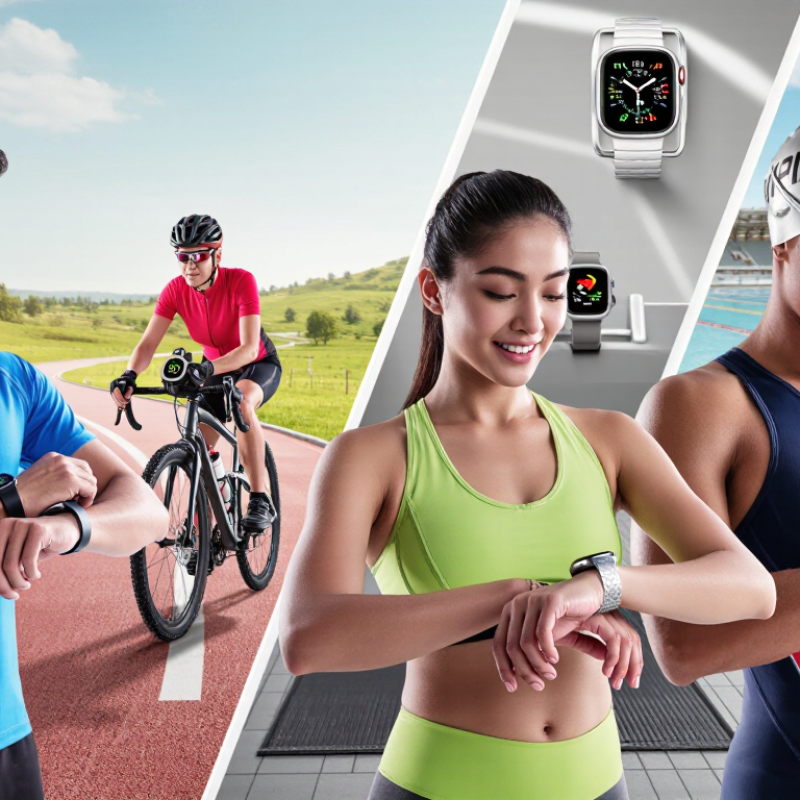
Table of Contents [Hide]
Define Your Sport and Smartwatch Use Cases
Define Your Sport and Smartwatch Use Cases
Start with the activity, not the screen. A runner may need GPS stability, pace alerts, and readable data in bright sunlight. A swimmer needs water resistance, stroke tracking, and physical buttons. A cyclist may value elevation, route guidance, and long battery life. These needs rarely fit one perfect specification. The American College of Sports Medicine’s Worldwide Survey of Fitness Trends 2024 ranked wearable technology as the leading fitness trend. That finding reflects growing demand, but popularity does not guarantee suitability.
Match every feature to a real training decision. If you train indoors, advanced GPS may add cost without value. If you exercise before sunrise, vibration alarms and clear contrast matter more. For casual walking, step accuracy and comfortable weight may be enough. The World Health Organization’s Global Status Report on Physical Activity 2022 estimated that 1.8 billion adults were insufficiently active in 2022. A simple watch can support consistency, but notifications can also distract from movement. That weakness deserves honest consideration.
Check how measurements work during your sport. Wrist heart-rate readings may shift during weightlifting or cold-weather cycling. Sleep scores can also encourage unnecessary anxiety. Review testing methods, sensor limitations, software support, and return policies before buying internationally. I would rather choose fewer dependable functions than collect impressive numbers I never use. Test the watch with your actual shoes, gloves, pool sessions, or commuting routine. Small details decide whether it stays on your wrist.
7 Smartwatch Sport Watch Buying Tips for Global Buyers - Define Your Sport and Smartwatch Use Cases
| Tip | Primary Sport or Use Case | Key Functions to Prioritize | Practical Specification Target | Important Buying Check |
|---|---|---|---|---|
| 1 | Running and Walking Road running, treadmill training, commuting, and daily step tracking. | Outdoor GPS, pace and distance data, heart-rate monitoring, interval workouts, step count, and route tracking. | Built-in multi-band or multi-system GNSS where available; at least 5 ATM water resistance; readable display in sunlight; approximately 7 days of typical smartwatch battery life. | Check whether GPS works independently without a phone and whether exported activity files use common formats such as GPX or FIT. |
| 2 | Cycling Indoor cycling, road cycling, mountain biking, and recreational rides. | GPS route recording, speed, elevation, heart rate, cadence support, navigation, and compatibility with external sensors. | At least 1–2 days of continuous GPS recording; barometric altimeter for elevation changes; Bluetooth and/or ANT+ sensor support when required. | Confirm support for the desired cadence, speed, power, or heart-rate sensors and verify the navigation map coverage for target countries. |
| 3 | Swimming and Water Sports Pool swimming, open-water swimming, kayaking, and beach activities. | Pool length settings, lap and stroke detection, swim interval tracking, open-water GPS, and water-resistant buttons or controls. | At least 5 ATM water resistance for swimming; 10 ATM may be preferable for higher exposure to water pressure; suitable operating temperature range. | Do not treat water resistance as unlimited waterproofing. Check saltwater-use instructions, rinse guidance, and whether touchscreen operation works in water. |
| 4 | Outdoor Hiking and Adventure Hiking, trekking, trail running, camping, and travel in remote areas. | Offline maps, breadcrumb navigation, compass, barometric altitude, storm alerts, route-back guidance, and location sharing. | Rugged case and protected display; at least 10 ATM water resistance for demanding conditions; 10–20 hours of GPS use or more; offline map storage. | Check map availability by country, map update policy, satellite or emergency communication requirements, and performance in cold temperatures. |
| 5 | Gym, Strength Training, and Wellness Weight training, indoor workouts, yoga, recovery, and general health monitoring. | Workout timers, repetition tracking, heart-rate zones, sleep monitoring, stress trends, recovery indicators, and guided breathing. | Comfortable lightweight case; replaceable or adjustable strap; at least 5 ATM water resistance; optical heart-rate sensor with continuous tracking. | Treat wellness readings as reference information rather than medical diagnosis. Check data export, privacy controls, and subscription requirements. |
| 6 | Daily Smart Functions Notifications, calls, travel, payments, alarms, and calendar reminders. | Phone notifications, message replies, Bluetooth calling, contactless payment, music controls, voice assistant access, and calendar integration. | Bluetooth 5.0 or newer is generally suitable; NFC is required for supported contactless payments; approximately 1–3 days of battery life for feature-rich use. | Verify operating-system compatibility, language support, regional payment availability, cellular-band compatibility, and local app-store access. |
| 7 | Global Travel and Long Battery Use Frequent travel, business trips, international outdoor activities, and limited charging access. | Long battery life, time-zone adjustment, offline operation, international charging support, emergency contacts, and durable materials. | At least 10 days of typical use for battery-focused models; USB charging with a universal input adapter; operating temperature commonly around 0–45°C. | Compare real-world battery results with GPS, always-on display, cellular, and sleep tracking enabled. Confirm warranty and service coverage in the destination market. |
Global Buyer Checklist: Confirm phone compatibility, supported languages, regional GPS and map coverage, charging standards, cellular frequencies, data privacy terms, warranty coverage, replacement strap availability, and the difference between advertised battery life and battery life during continuous GPS use.