- Proudly Made in the USA

Choosing reliable China suppliers for 1 hour fire rated windows requires more than comparing catalog prices. These products must protect people, limit flame spread, and maintain integrity during a tested fire period. A dependable supplier should explain the complete window system, including glass, frame, seals, hardware, and installation requirements.
This guide examines manufacturers with practical experience in fire-resistant window production. It considers factory capability, testing records, quality-control procedures, export experience, and technical support. Certifications should come from recognized testing organizations and match the intended market. A supplier’s brochure is not enough. Evidence matters.
Buyers should also review project references, production photographs, sample reports, and after-sales communication. Small details can reveal major differences. For example, a warped steel frame, incomplete sealing, or unsuitable glazing bead may weaken the entire assembly. The stated fire rating applies to a tested configuration, not automatically to every custom design.
Some suppliers may offer attractive prices, yet provide limited documentation or unclear installation guidance. That weakness should not be ignored. On-site conditions can differ from laboratory testing, and even experienced manufacturers may have gaps in support. Careful verification remains necessary.
The following overview introduces leading China suppliers and explains how to compare their products responsibly. It focuses on technical credibility, manufacturing consistency, delivery reliability, and long-term project value. The goal is not to promote one company blindly, but to help architects, contractors, and buyers ask better questions before placing an order.
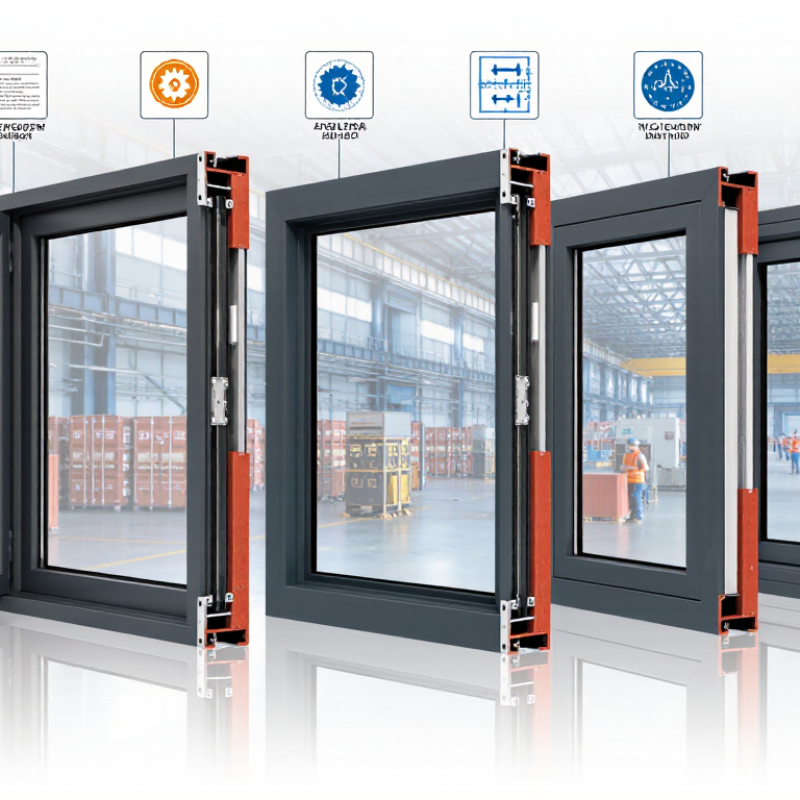
A 1-hour fire-rated window is a tested window assembly designed to resist fire exposure for at least 60 minutes. The rating applies to the complete system, not the glass alone. It usually includes fire-resistant glazing, a steel or reinforced frame, heat-resistant seals, and approved hardware. Every component must work together under controlled testing conditions.
The glass may look clear, but it is not ordinary architectural glazing. Some systems use multilayer glass that turns opaque when heated. This reaction helps block flames, smoke, and intense radiant heat. Other designs use specialized transparent materials with different performance limits. A window can also require smoke-control or hose-stream testing, depending on the project specification. A one-hour rating does not automatically cover every fire performance requirement.
When evaluating suppliers in China, request current test reports, product drawings, installation instructions, and traceable quality records. Check whether the report matches the proposed size, frame material, glazing thickness, and hardware. Small changes can affect the tested result. This is where projects sometimes become uncertain. A compliant product can still fail if the surrounding wall, anchors, or perimeter seals are installed incorrectly. Site teams should follow the approved installation method and inspect each joint before concealment. Looking only at the glass is a common, costly mistake.
China Top 1 Hour Fire Rated Windows Suppliers
China’s fire-rated window suppliers are commonly classified by certification ability, production control, and project experience. A qualified manufacturer should provide test reports for complete window assemblies, not only individual glass panels. These reports should identify the frame, glass, seals, hardware, dimensions, and tested fire duration. A catalog is not proof.
Suppliers can also be divided into certified manufacturers, OEM fabricators, system integrators, and trading companies. Certified manufacturers usually control frame welding, glass processing, assembly, and quality inspection internally. OEM fabricators may produce reliable windows, but buyers should verify who owns the tested design. System integrators often combine products from different workshops. This can improve flexibility, yet it may complicate traceability. Trading companies can support communication and export documentation, but their factory access needs careful checking.
Another useful classification considers project capability. Some suppliers focus on standard one-hour windows for apartments, schools, and commercial buildings. Others handle customized sizes, acoustic requirements, thermal insulation, or complex installation conditions. Experienced suppliers can explain how site openings, wall construction, glazing beads, and fire-rated seals affect performance. They should also offer packing records, batch identification, installation guidance, and after-sales inspection. Ask for recent project evidence.
Not every supplier fits one category. Classification is helpful, but imperfect. Buyers should compare documents, factory processes, sample details, and installation support before making a decision.
| Classification Dimension | Supplier Category | Typical 1-Hour Fire-Rated Window Data | Key Technical Criteria | Common Applicable Standard or Test Basis | Verification Documents to Request |
|---|---|---|---|---|---|
| Fire-Resistance Duration | 60-minute fire-rated window supplier | 60 minutes | The complete tested window assembly maintains the required fire-performance properties for at least 60 minutes under the applicable test procedure. | GB 16809 for fire-resistant windows; other projects may specify ASTM E119, UL 10B, UL 10C, or EN 13501-2 classifications. | Current test report identifying the exact frame, glass, hardware, dimensions, and installation method. |
| Performance Classification | Integrity-focused supplier | E 60 / integrity for 60 minutes | Prevents flames and hot gases from passing through the tested assembly for the stated period. Integrity alone does not automatically confirm insulation performance. | European E classification under EN 13501-2 and the relevant fire-resistance test method. | Classification report showing whether the product is rated for integrity only or for both integrity and insulation. |
| Performance Classification | Integrity-and-insulation supplier | EI 60 / integrity and insulation for 60 minutes | Controls flame and hot-gas passage while limiting heat transfer on the non-fire side within the specified test limits. | EN 13501-2 classification supported by the applicable EN fire-resistance test standard. | Report or classification document stating the EI rating and the approved size range. |
| Glass Technology | Intumescent laminated glass supplier | Transparent fire-resistant glazing; commonly configured for 30-, 60-, or higher-minute assemblies depending on the tested build-up | Special interlayers expand or react when heated. The glass must be tested as part of a complete window system rather than evaluated independently. | GB 15763.1 for fire-resistant glass in China; project specifications may also reference EN or ASTM test methods. | Glass test report, glass make-up, thickness, maximum pane size, and compatibility statement for the proposed frame. |
| Frame Material | Steel-frame fire-window supplier | Common for robust fire compartments and industrial applications; exact rating depends on the tested assembly | Frame sections, joints, glazing beads, seals, anchors, and protective coatings must match the tested construction. | GB 16809 or the fire-test standard specified by the project jurisdiction. | Section drawings, material certificates, coating details, welding or joint specifications, and assembly test evidence. |
| Frame Material | Aluminium-frame fire-window supplier | Available in tested fire-rated systems using insulated sections and fire-resistant glazing; the rating is product-specific | Thermally modified or insulated profiles, fire-resistant glazing, intumescent seals, and approved hardware are required as one tested system. | Applicable national or project-specific fire-resistance standard; certification must cover the complete aluminium system. | System test report, profile cross-sections, thermal-break details, seal specifications, and permitted dimensions. |
| Opening Configuration | Fixed-window supplier | Usually the simplest configuration for achieving a 60-minute rating because there are no operating hinges or opening mechanisms | Performance depends on the fixed frame, glazing system, perimeter seals, anchors, and approved installation details. | GB 16809 or the standard named in the project specification. | Tested fixed-window drawings, maximum tested dimensions, glazing details, and installation instructions. |
| Opening Configuration | Operable fire-window supplier | 60-minute rating may be available for selected inward- or outward-opening configurations | Self-closing devices, fire-rated hinges, locking components, perimeter seals, and the opening direction must correspond to the tested design. | Relevant fire-window test standard and the project’s hardware requirements. | Hardware schedule, self-closing test evidence, approved opening angle, cycle data, and complete assembly report. |
| Certification Scope | Domestic-project supplier | Products configured for projects governed primarily by Chinese construction and fire-safety requirements | Documents should identify the product model, test configuration, fire duration, dimensions, materials, and applicable installation conditions. | GB 16809 and GB 15763.1 are commonly relevant to fire-resistant windows and fire-resistant glass in China. | Chinese test reports, inspection records, product drawings, quality-control records, and installation guidance. |
| Certification Scope | Export-project supplier | Products adapted to the destination market; a Chinese test report may not replace the buyer’s required local evidence | Classification must match the destination country’s terminology, test method, glazing system, frame type, and installation conditions. | Depending on the market: EN 13501-2, ASTM E119, UL 10B, UL 10C, or another specified standard. | Third-party report, classification certificate, factory quality records, traceability documents, and destination-market compliance statement. |
| Manufacturing Capability | Standard-size production supplier | Manufactures within the tested size range and standard configuration | Lower customization risk when the ordered dimensions, glass composition, frame sections, and hardware remain within the tested design. | The applicable test report and its permitted size and configuration limits. | Standard product drawings, size matrix, bill of materials, inspection plan, and sample approval records. |
| Manufacturing Capability | Project-customization supplier | Can adapt dimensions, glazing, finish, hardware, or installation details only where the changes remain technically justified | Any change to frame material, glass thickness, pane size, hardware, seals, or fixing method may affect the fire rating and requires technical review. | Original fire test evidence plus engineering assessment where permitted by the governing standard. | Deviation list, engineering assessment, revised drawings, sample approval, and written confirmation of rating applicability. |
| Quality-Control Capability | Traceability-controlled supplier | Links each production batch to approved materials, assembly records, inspection results, and shipment documents | Fire performance is dependent on consistent materials and assembly; traceability supports verification of production conformity. | Project quality plan and the quality-control requirements associated with the selected fire test standard. | Batch records, incoming-material inspection, glass certificates, sealant or gasket records, dimensional inspection, and final inspection reports. |
China’s one-hour fire-rated windows are governed by several connected standards, not one isolated document. GB 16809, Fire Windows, sets key requirements for fire resistance, integrity, insulation, materials, and product testing. GB/T 9978 provides the fire-resistance test methods for building components. Fire-resistant glass is also assessed under GB 15763.1, where applicable. These documents help determine whether a window can resist flames, hot gases, and heat for the required period.
Designers must also consult GB 55037, the General Code for Fire Protection of Buildings and Constructions, and GB 50016, the Code for Fire Protection Design of Buildings. These codes define where fire-rated windows may be needed, including openings near fire compartments, escape routes, and external walls. A tested window is not automatically suitable for every project. Its frame, glass, hardware, wall connection, and installation method should match the tested configuration. Small changes can matter.
Ask suppliers for current test reports, classification records, and installation instructions. Check whether the report covers one hour, insulation, integrity, or both. Some documents use different terms, which can create costly confusion. In practice, project teams sometimes focus on the glass and overlook the frame or surrounding wall. That is a weak point. Standards also change, so confirm the latest edition and local authority requirements before approval.
Evaluating China’s leading fire-rated window suppliers requires more than comparing prices. Start by defining the required one-hour performance, such as integrity, insulation, or both. The test standard must match the destination market and project specification. A certificate alone is not enough. Check whether it covers the exact frame material, glass build-up, hardware, dimensions, and opening direction you plan to order.
I look for complete laboratory reports from recognized testing bodies, not cropped certificate images. The report should identify the tested wall system and installation method. Ask for production drawings, material specifications, and batch traceability records. A reliable supplier can explain how steel, aluminum, glazing seals, and fire-resistant glass work together. Request recent project references, factory audit access, and evidence of quality checks during cutting, welding, coating, and assembly. Good answers are specific.
Installation deserves equal attention. Even a compliant window can fail when the gap, anchors, or firestop material is wrong. Ask whether the supplier provides tested installation details and trained technical support. A small sample order can reveal packaging quality, dimensional accuracy, and communication speed. It may also expose weaknesses.
Do not trust perfect promises. Some suppliers present impressive documents but avoid difficult questions about oversize units or custom hardware. Recheck every claim with the test laboratory or an independent consultant. Lead time, replacement parts, and after-sales response should be written clearly, because fire protection is not an area for assumptions.
Fire-rated window suppliers should be assessed by the classification and duration supported by accredited test evidence. The chart below shows common European fire-resistance classification combinations and their rated durations. A 60-minute rating corresponds to the one-hour benchmark frequently required in commercial projects.
Evaluation note: Request complete test reports, certification scope, glass and frame specifications, production quality records, and project-specific compliance confirmation. E indicates integrity, EW indicates integrity plus radiation control, and EI indicates integrity plus insulation. Requirements may vary by local building code and test standard.
One-hour fire-rated windows are required where a glazed opening could weaken a fire-resistance barrier. Common applications include stair enclosures, exit corridors, elevator shafts, fire barriers, and smoke compartments. Hospitals, schools, hotels, and high-rise housing often use them to protect escape routes and limit heat transfer. Exterior windows may also need fire protection when walls are close to property lines or neighboring buildings.
The need is not based on appearance. It depends on the wall rating, opening size, occupancy, and local building code. NFPA’s Fire Loss in the United States During 2023 reported about 1.39 million fires and 3,670 civilian fire deaths. These figures show why compartmentation matters, although a window alone cannot guarantee safe evacuation. Testing standards such as NFPA 252, UL 10C, and ASTM E119 help verify performance. Requirements still vary by jurisdiction. That detail is easy to miss.
Tips: Confirm the required one-hour rating with the architect, code official, and fire consultant. Check whether the project needs fire-protective or fire-resistive glazing. Review the frame, seals, hardware, and installation together. A certified glass unit can fail when installed with an untested frame. Keep sightlines clear, too. Curtains, films, or later modifications may affect performance. When selecting suppliers, request current test reports, size limitations, maintenance guidance, and traceable quality records. Supplier claims should be independently checked.
Whether you’re looking for fire-rated walls, doors, openings, floors or a specialty service, we have the solution for you. With over 40 years of experience in testing, innovating, and providing technologically advanced fire-rated glass and framing products, we deliver unyielding performance and quality at a competitive price.