- Proudly Made in the USA

Choosing China’s top Livestock Medical Syringe suppliers requires more than comparing prices or polished product catalogs. Veterinary distributors need dependable tools for vaccination, medication delivery, and routine animal health procedures. A syringe should offer clear graduations, smooth plunger movement, secure needle attachment, and packaging that protects sterility.
Small details matter.
During supplier evaluation, experienced buyers often request product samples before placing larger orders. The sample can reveal uneven markings, stiff plungers, loose caps, or fragile packaging. These issues may appear minor, yet they can slow work in busy farms and livestock clinics. Suppliers with documented quality systems, traceable production records, and responsive technical teams deserve closer attention. Relevant certifications should be checked against the destination market, not accepted blindly.
Reliable manufacturers should also explain materials, available sizes, needle options, sterilization methods, and storage conditions. They should provide consistent specifications for every shipment. Communication matters when custom labels, private packaging, or different animal applications are involved. Regional veterinary regulations must guide final purchasing decisions.
A strong supplier is not necessarily the cheapest.
The phrase “China Top Livestock Medical Syringe Suppliers” should therefore describe verified performance, not advertising language alone. Buyer reviews, factory audits, quality reports, and after-sales support can provide useful evidence. Still, no supplier is perfect, and claims require independent checking. A careful comparison helps importers reduce avoidable risks while selecting practical, compliant, and dependable syringe solutions for professional livestock care.
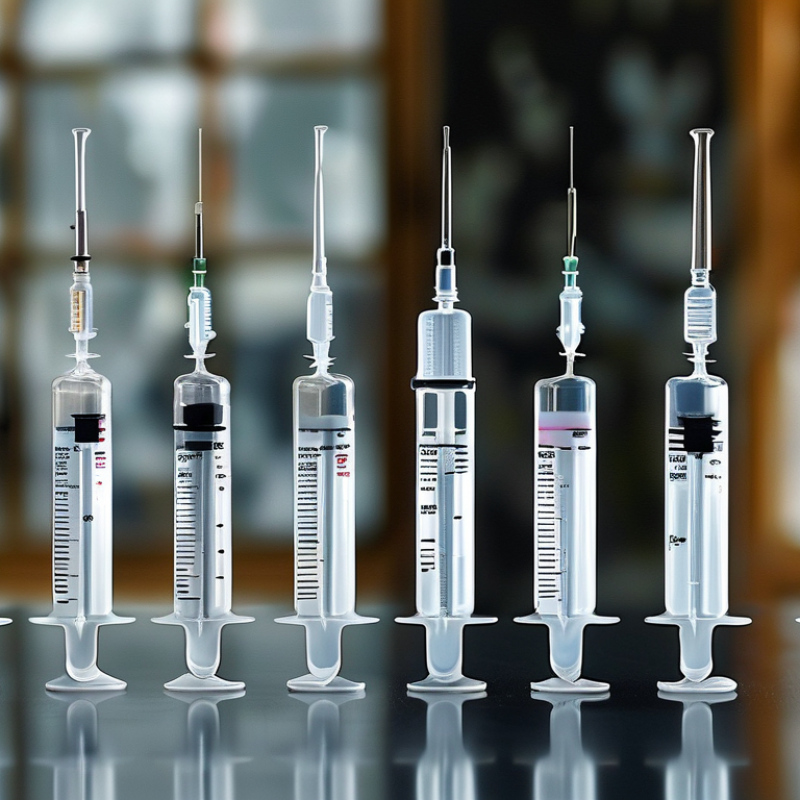
China’s livestock syringe market is shaped by its enormous hog industry. In 2023, China slaughtered 726.62 million hogs, according to reported national statistics. That volume creates steady demand for reliable vaccination and treatment equipment. Veterinary teams need syringes that remain accurate during long working hours. They also need designs suited to different herd sizes and handling conditions.
Practical procurement experience shows that the lowest price is rarely the safest measure. A dependable supplier should provide clear calibration data, consistent materials, and traceable batch records. Common choices include reusable metal syringes, adjustable dosing models, and disposable plastic syringes. Each option fits a different farm routine. Metal models may tolerate repeated use, but cleaning quality matters greatly. Disposable units reduce cleaning concerns, yet storage conditions must remain controlled.
Small details deserve attention. A smooth plunger reduces hand fatigue. A secure needle connection lowers leakage risks. Clear measurement marks help prevent dosing errors. Suppliers should explain sterilization methods, packaging integrity, and quality inspections before shipment. They should also support sample testing and provide technical documents for veterinary review. A supplier may look professional online, but factory verification is still necessary. Catalog claims can be incomplete. That is an uncomfortable truth. Buyers should compare production capacity, inspection records, response time, and compliance documents rather than relying on attractive photographs. For China’s high-volume hog sector, dependable syringe supply depends on evidence, repeatable quality, and careful evaluation.

China slaughtered approximately 726.62 million hogs in 2023, the highest level in this four-year series. The sustained increase in hog processing volume indicates continued demand for livestock healthcare supplies, including veterinary syringes used for vaccination, treatment, and herd management. Data source: National Bureau of Statistics of China.
China’s livestock syringe industry serves a large and growing animal-health market. FAOSTAT data recorded more than 350 million tonnes of global meat production in 2022. That scale creates steady demand for reliable dosing tools. Disposable syringes support quick, hygienic work during vaccination programs. Reusable syringes suit farms that need durable equipment and controlled cleaning procedures. However, poor sterilization can compromise animal safety.
Automatic syringes improve speed when treating many animals. Adjustable dose settings are especially useful for cattle, pigs, and poultry operations. Needle-free syringes reduce puncture risks and may help lower tissue damage. They are not ideal for every medicine, though. Buyers should request validation data for pressure, dose accuracy, and delivery depth. A 2023 Grand View Research report identified automation and safer injection systems as important medical-device market trends. The same direction is visible in veterinary equipment.
Experienced buyers usually assess Chinese suppliers through factory audits, batch records, material certificates, and sample testing. ISO 13485 certification can indicate a controlled quality system, but it does not replace product verification. Ask about silicone compatibility, plunger smoothness, nozzle strength, and performance after repeated use. Small details matter.
No supplier is perfect.
The OECD-FAO Agricultural Outlook 2024–2033 expects continued growth in global animal-product demand. Suppliers offering several syringe types can better support changing farm conditions. Still, the cheapest option may create hidden costs through leakage, inaccurate dosing, or early breakage. Some purchasing decisions need more reflection.
China Top Livestock Medical Syringe Suppliers?
When evaluating livestock syringe suppliers in China, technical compliance should guide every purchasing decision. ISO 7886-1 helps verify key performance details for applicable single-use syringes. These include leakage resistance, graduated scale accuracy, plunger movement, and dead-space control. A practical inspection may reveal stiff plungers or unclear markings. Small defects can affect dosage accuracy in busy farm settings.
ISO 13485 is equally important because it evaluates the supplier’s medical-device quality management system. Ask for current certificates, scope details, production records, and batch traceability. CE compliance requires appropriate conformity assessment for the intended European market. It is not simply a printed logo. For China, NMPA registration or filing may apply, depending on product classification and intended use. Documents should match the exact syringe model, packaging, and sterile status.
Tips: Request samples from the same production line. Check barrel clarity, graduation readability, needle attachment, and package seals. Ask how complaints are investigated. Clarify sterilization validation and shelf-life evidence. Keep records.
A reliable supplier should explain test methods without vague promises. Product files must remain consistent across certificates, labels, and inspection reports. Some buyers focus only on unit price. That is risky. A lower quote may hide weaker traceability or unstable component quality. Even experienced teams should recheck assumptions before approving a long-term order.
China’s livestock syringe market serves vaccination, treatment, and herd-management programs at large scale. FAO reports that livestock supports the livelihoods of at least 1.3 billion people worldwide. This demand makes supplier capacity important, but production volume alone proves little. Ask for monthly output, equipment lists, shift capacity, and recent delivery records. A factory producing 500,000 syringes monthly may still struggle with a sudden 2-million-unit order. Check the evidence.
MOQ should match your farm network and testing budget. A low MOQ can reduce inventory risk, while an unusually low price may hide weaker inspection controls. Request pilot samples from the same production line. Measure barrel clarity, plunger movement, needle attachment, and dose accuracy. ISO 13485 certification supports a controlled quality system, but it does not replace batch-level verification.
Sterility requires documented validation, not a printed claim. Request sterilization method, validated cycle parameters, bioburden results, and certificates for each shipment. ISO 11135 covers ethylene oxide sterilization, while ISO 11137 covers radiation sterilization. Traceability should connect every carton to resin, needle lot, operator records, inspection results, and release approval. FAO’s 2023 livestock reporting highlights the scale of animal-health operations, where one missing record can affect thousands of doses. Some suppliers provide excellent documents but inconsistent physical samples. That gap deserves a second audit.
China Top Livestock Medical Syringe Suppliers: Export Verification
Reliable livestock syringe suppliers should provide more than competitive prices. Export buyers need evidence that each shipment matches its approved specification. Ask for the batch number, production date, material details, and a certificate of analysis. These records should connect the carton to the factory inspection file.
Batch testing should cover barrel accuracy, plunger movement, leakage, needle attachment, packaging integrity, and sterility where applicable. Test results must identify sampling methods and acceptance limits. Independent laboratories can add confidence, especially for new suppliers. Still, a polished report is not enough. Check the laboratory’s accreditation and verify that the tested model matches the shipped product.
Veterinary registration depends on the destination market. Suppliers should provide registration records, manufacturing licenses, declarations of conformity, and relevant quality-system certificates. Documents must show consistent company information, product dimensions, and intended animal use. A mismatch in wording can delay customs clearance.
Traceability matters during transport. Each outer carton should carry a readable lot code, quantity, expiry information, and storage guidance. Request retained-sample procedures and complaint-handling records. These details reveal how seriously a supplier manages quality after production.
Some exporters answer quickly but provide incomplete files. That is a warning, not a minor inconvenience. A practical verification plan should include a pre-shipment inspection, random carton checks, and document review by someone familiar with veterinary imports. No supplier is perfect. The real question is whether weaknesses are visible, explained, and corrected before shipment.
| Verification Dimension | What Should Be Verified | Relevant Standard or Regulatory Reference | Acceptable Evidence | Priority |
|---|---|---|---|---|
| Product identity | Syringe type, nominal capacity, graduations, needle configuration, sterile or non-sterile status, single-use designation, and intended livestock application. | ISO 7886-1 for manually operated single-use syringes; applicable national veterinary-device requirements. | Controlled product specification, technical drawing, labeling artwork, and product photographs that match the shipped configuration. | High |
| Manufacturing-site qualification | Legal manufacturing entity, production address, quality-system scope, cleanroom or controlled-area controls, and traceability of critical components. | ISO 13485:2016 quality-management-system requirements for medical devices. | Current certificate issued by an accredited certification body, certificate scope, site address, and recent surveillance or recertification status. | High |
| Veterinary registration | Whether the product is regulated as a veterinary medical device, animal-health product, or general medical device in the destination market. | Destination-country rules; examples include China NMPA requirements, EU Regulation (EU) 2017/745 where applicable, and U.S. FDA device requirements where applicable. | Valid registration, listing, notification, or exemption record from the competent authority, together with matching model and manufacturer information. | High |
| Batch traceability | Unique lot number, production date, raw-material records, equipment identification, operator or shift records, packaging lot, and release status. | ISO 13485 documentation and traceability controls; applicable destination-market requirements. | Batch manufacturing record, device history record, certificate of analysis or conformity, and documented lot-release approval. | High |
| Dimensional inspection | Barrel capacity, graduation accuracy, plunger fit, nozzle dimensions, needle attachment, and component tolerances. | ISO 7886-1 and the approved product specification or technical drawing. | Signed inspection report with sampling plan, calibrated instruments, measured results, specification limits, and nonconformance disposition. | High |
| Leakage and pressure testing | Leakage through the syringe assembly, plunger seal integrity, nozzle connection, and resistance to the specified test pressure. | ISO 7886-1, using the applicable test method and product-specific acceptance criteria. | Batch test report identifying test pressure, dwell time, sample quantity, equipment calibration, results, and pass/fail decision. | High |
| Functional performance | Plunger movement, break-loose force, sustained force, smoothness, dose delivery, and absence of component separation during use. | ISO 7886-1 and the approved performance specification. | Validated test method, raw measurement data, defined acceptance limits, calibrated force-measuring equipment, and signed quality approval. | High |
| Visual and particulate inspection | Cracks, burrs, flash, deformation, discoloration, foreign matter, damaged graduations, and packaging defects. | ISO 7886-1, approved visual-inspection procedure, and clean manufacturing controls. | Inspection checklist, defect classification, sample size, representative photographs where appropriate, and corrective-action records for failures. | High |
| Sterility validation | Sterilization method, validated process parameters, sterilization load configuration, routine monitoring, and sterile-barrier integrity. | ISO 11135 for ethylene oxide sterilization; ISO 11137 for radiation sterilization; ISO 11607 for sterile-barrier packaging, as applicable. | Sterilization validation summary, routine batch records, biological or dosimetric monitoring records, and packaging validation documents. | High |
| Bioburden and sterility testing | Pre-sterilization microbial load and post-sterilization sterility results, where required by the validated process and applicable market rules. | ISO 11737-1 for bioburden determination and ISO 11737-2 for sterility tests used in sterilization validation or routine control. | Laboratory report showing method, sample identification, test date, laboratory qualification, results, and link to the production lot. | High |
| Endotoxin and biological safety | Endotoxin risk, material biocompatibility, extractables or leachables risk, and contact duration with animal tissue or medication. | ISO 10993 series for biological evaluation; USP <85> or equivalent endotoxin method where applicable. | Risk-based biological-evaluation report, material declarations, endotoxin test report when required, and documented acceptance criteria. | High |
| Materials and chemical compliance | Polymer and elastomer grades, needle material, adhesives, colorants, lubricants, latex status, and restricted-substance controls. | Applicable chemical, material-safety, and destination-market requirements; ISO 10993 where biological contact applies. | Supplier declarations, material certificates, safety data sheets where applicable, restricted-substance statement, and change-control records. | Medium |
| Packaging and shelf life | Individual packaging, shipping carton protection, seal integrity, storage conditions, expiry dating, and transport simulation. | ISO 11607 for terminally sterilized medical-device packaging; ASTM D4169 or equivalent distribution-testing method where applicable. | Packaging validation, seal-strength or integrity results, accelerated or real-time aging rationale, transport-test report, and labeled storage conditions. | High |
| Labeling and instructions | Sterility status, single-use warning, lot number, expiry date, capacity, needle details, storage conditions, manufacturer information, and instructions for use. | ISO 15223-1 symbols and destination-market labeling requirements, where applicable. | Approved artwork, multilingual instructions, label-control record, translation review, and packaging-to-document consistency check. | High |
| Risk management | Risks from leakage, incorrect dose delivery, needle detachment, breakage, contamination, sharps injury, and foreseeable misuse. | ISO 14971 risk-management principles for medical devices. | Risk-management plan, hazard analysis, verification links, residual-risk evaluation, complaint trends, and post-market monitoring procedure. | High |
| Export and customs documentation | Correct product description, harmonized tariff classification, country of origin, shipment quantity, sterile status, and consignee details. | Destination-country customs rules and the applicable Harmonized System classification confirmed by the importer or customs broker. | Commercial invoice, packing list, certificate of origin where required, transport documents, export declaration, and customs classification confirmation. | Medium |
| Complaint and recall controls | Complaint intake, investigation timelines, corrective and preventive action, field safety action, recall communication, and lot-level retrieval. | ISO 13485 corrective-action requirements and applicable vigilance or recall regulations. | Documented complaint procedure, anonymized trend data, CAPA examples, mock-recall evidence, and response-time commitments. | Medium |
Whether you’re looking for fire-rated walls, doors, openings, floors or a specialty service, we have the solution for you. With over 40 years of experience in testing, innovating, and providing technologically advanced fire-rated glass and framing products, we deliver unyielding performance and quality at a competitive price.
