- Proudly Made in the USA

A Universal Power Adapter can make travel simpler, but it is not a magic solution for every electrical problem. Picture arriving at a hotel with a phone at 8% battery and a charger plug that will not fit the wall outlet. The right adapter can bridge that physical gap. Small detail. Big relief. Yet travelers should check their device labels before plugging anything in. An adapter changes plug compatibility; it does not necessarily convert voltage or frequency.
That distinction matters for laptops, cameras, electric toothbrushes, and other everyday gear. Many modern chargers accept a range of input voltages, often printed in small text near the prongs. Some appliances do not. A qualified travel specialist or the device manufacturer can help clarify unclear specifications. I have seen people focus on the number of USB ports and overlook the voltage label. It is an easy mistake, and worth reconsidering.
This guide explores when a Universal Power Adapter is useful, what features deserve attention, and how to use one with greater confidence. Travelers may value interchangeable plugs, USB charging, or a compact body that fits beside a hotel bedside lamp. Still, no single model suits every itinerary or device. Check the destination’s outlet type, confirm your equipment’s input requirements, and follow the adapter maker’s instructions. A little preparation can prevent a dead battery—or a damaged appliance. Convenience is valuable. Care matters more.
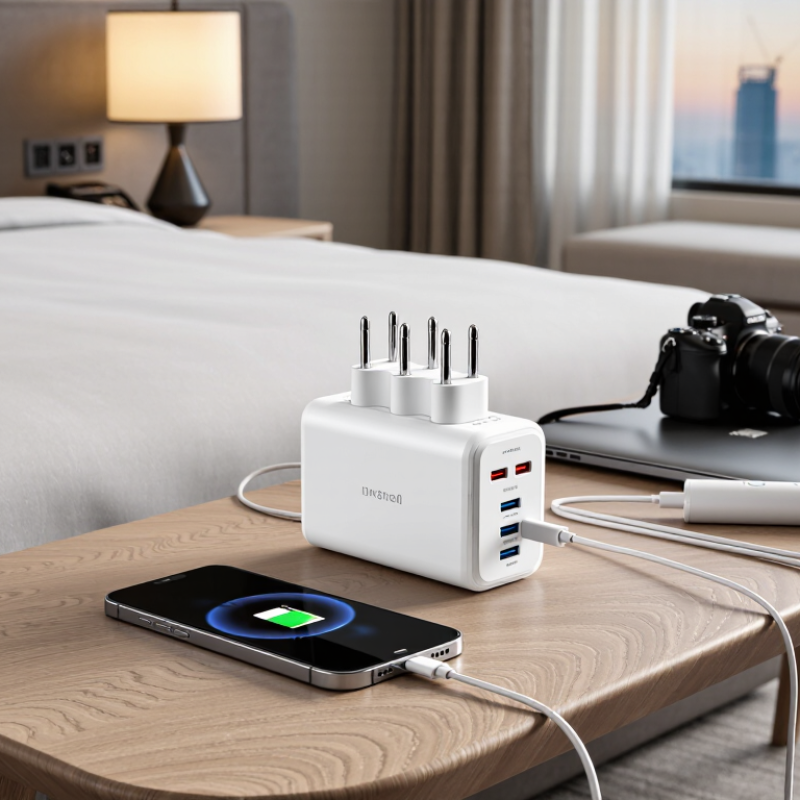
A universal power adapter is a compact connector that lets a plug fit a different style of wall outlet. It does not create electricity, and it usually does not change voltage. Think of a traveler’s plug with two flat blades meeting a round-pin socket: the adapter bridges the shape difference. The International Electrotechnical Commission’s World Plugs overview describes 15 plug types used around the world. That variety explains the adapter’s purpose. Small device, useful job.
The details matter. IEC 60884-1 covers household plugs and socket-outlets rated up to 250 volts AC and 16 amperes, but an adapter’s own limits depend on its design and markings. Check those ratings against both the destination supply and your device. A phone charger marked “100–240 V” can generally handle a range of supply voltages; a single-voltage appliance may need a separate voltage converter. An adapter alone will not protect it. Also check grounding: a two-pin adapter may not preserve the earth connection on a three-pin plug. I’ve found this easy to overlook when packing. It is not a glamorous detail, but it matters.

A universal power adapter connects a device’s plug to an outlet with a different shape. The need is practical: the International Electrotechnical Commission’s World Plugs guide describes 15 plug types used around the world. A compact adapter uses sliding pins or interchangeable faces to match common outlet patterns, such as flat blades or round pins. Click the correct pins into place, then check that they sit firmly before plugging in. A loose fit can interrupt charging.
But an adapter changes the connection, not the electricity itself. The IEC’s guidance on plug systems shows why travelers encounter different outlet designs; voltage and frequency also vary between power systems. Check the device label for its input range. A phone charger marked “100–240 V” can generally accept either voltage, while a device rated for one voltage may need a separate voltage converter. This distinction is easy to miss. I have seen people assume “universal” means electrically universal, and that assumption can damage equipment.
Choose an adapter with clearly marked outlet types, secure pins, and suitable current ratings. IEC 60884-1 sets general safety requirements for household plugs and socket-outlets, but an adapter’s compliance depends on its own design and certification. Avoid forcing pins or stacking adapters; both can create a poor connection. For a laptop, the adapter should fit without wobbling, and the charger should remain cool during normal use. Small details matter. A universal adapter is a bridge between shapes, not a cure for every power mismatch.
A universal power adapter is useful when a trip crosses countries with different outlet shapes. The International Electrotechnical Commission documents multiple plug and socket systems around the world, so one familiar charger may not fit at your destination. That matters at a hotel bedside, an airport seat, or a rental apartment with only one accessible outlet. UN Tourism reported about 1.4 billion international tourist arrivals in 2024, nearly 99% of the 2019 level. More travelers mean more situations where a compact adapter can save time. It is a small item, but discovering the wrong plug after midnight is frustrating.
Check the details before packing. An adapter changes the plug’s physical connection; it does not automatically convert voltage or frequency. Read the input range printed on each device, especially for hair tools and older electronics. Many phone and laptop chargers accept a broad voltage range, but that should be verified, not assumed. I have found that a tiny status light can be hard to see in a bright room. Not a major flaw, but worth noting. Choose an adapter rated for the devices you plan to connect, and avoid overloading it with several high-power appliances. For multi-country itineraries, confirm that its plug configuration covers every stop. A little checking beats borrowing a charger.
A universal power adapter changes the shape of a plug; it does not necessarily change the electricity’s voltage. Check the small label on your device or its power brick before packing. If it says “Input: 100–240V, 50/60Hz,” it can generally accept power across that range with the right plug adapter. Small detail. Check twice.
If the label lists only one voltage, compare it with the outlet voltage at your destination. A mismatch may require a suitable voltage converter, not just a universal adapter. Also compare the adapter’s rated wattage or current with the device’s needs. Hair dryers and other high-power appliances can exceed a compact adapter’s limits, even when the plug fits. I’ve found that the tiny print is easy to overlook, especially when packing in a hurry. That is not a great reason to guess. For USB-powered devices, check the charger’s input rating and the cable’s compatibility; for sensitive equipment, follow the manufacturer’s instructions. If a rating is unclear, leave the device unplugged until you can verify it.
A universal power adapter is useful when a trip includes several plug shapes, but “universal” does not mean it works everywhere or with every device. Check the destination’s outlet type and the adapter’s supported regions before packing. Then inspect your device label for its input voltage and frequency. Many phone chargers accept a wide voltage range, while some appliances do not. A plug adapter changes the connection shape; it may not convert voltage. That distinction matters.
Consider the total power draw, especially for hair dryers, laptops, or other high-wattage devices. The adapter’s rating should meet or exceed what you plan to connect. Look for secure prongs, a grounded connection when your equipment requires one, and clear safety information from a recognized testing organization. USB ports can reduce clutter, but check their output if you need to charge several devices at once. Small details count. Loose sockets or crowded ports can make a tidy setup unreliable.
Think about size and handling, too. A compact adapter is easier to carry, yet bulky chargers can block neighboring outlets. I would test the adapter at home with the devices I intend to bring; it is a simple check, though easy to forget. If an appliance’s voltage requirements remain unclear, do not guess. Verify them with the device instructions or a qualified technician before plugging it in.
Whether you’re looking for fire-rated walls, doors, openings, floors or a specialty service, we have the solution for you. With over 40 years of experience in testing, innovating, and providing technologically advanced fire-rated glass and framing products, we deliver unyielding performance and quality at a competitive price.
