- Proudly Made in the USA

5 Best Fire Resistant Glass Types for Global Buyers?
Choosing fire resistant glass for an international project is rarely a simple product comparison. Heat exposure, framing systems, installation quality, and local testing requirements can change the result. A glass panel that performs well in a laboratory may fail when paired with an unsuitable frame, gasket, or fixing method. That detail matters.
This guide examines five practical fire resistant glass types: wired glass, ceramic glass, laminated fire-rated glass, insulated fire-resistant units, and gel-filled systems. Each type offers different levels of integrity, insulation, visibility, weight, and cost. Some are better for doors. Others suit façades, partitions, stairwells, or observation windows. There is no universal winner.
Fire safety engineer Dr. José L. Torero has emphasized, “Fire safety depends on understanding the whole system, not one isolated material.” That principle should guide every buying decision. Buyers should request certified test reports, fire-resistance classifications, installation instructions, and evidence matching the intended frame system. Product labels alone are not enough.
The practical view can be less comfortable. Budget products may look identical to premium systems. They are not always equal. A small installation mistake can weaken the entire assembly. Global buyers must also check regional standards, shipping protection, replacement access, and technical support. These points are easy to overlook.
This comparison is designed to make those differences visible. It also leaves room for caution. Specifications change, testing methods differ, and supplier claims require verification before approval. Safety deserves more than a polished brochure.
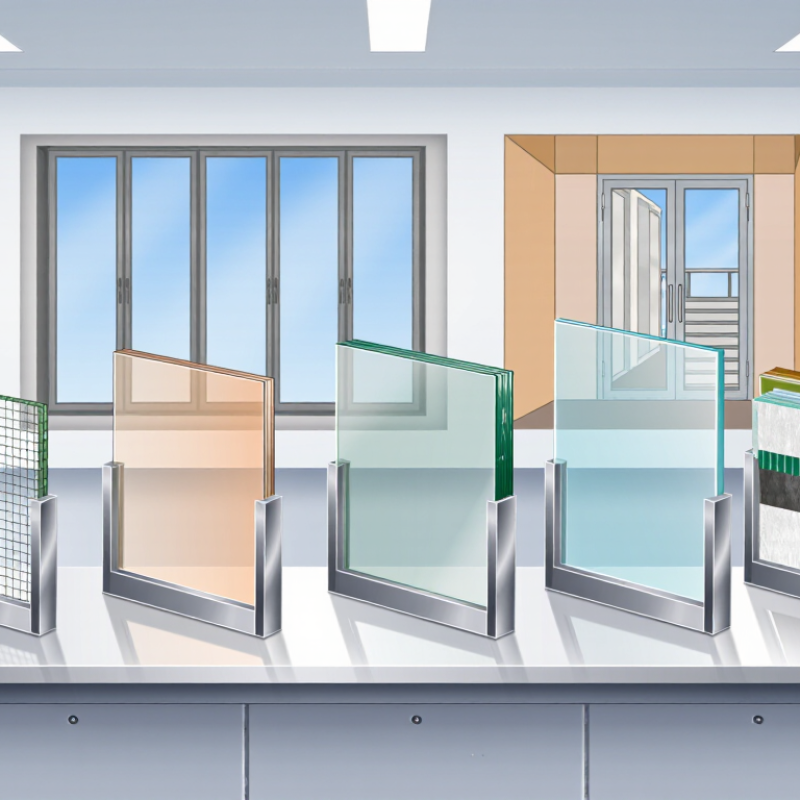
Table of Contents
[Hide]
What Is Fire-Resistant Glass and How Is Its Performance Rated?
Fire-resistant glass is engineered to limit fire, smoke, heat, or radiant energy for a tested period. Ordinary tempered glass may break quickly under severe thermal shock. Fire-rated glazing uses special compositions, interlayers, or cavity systems to remain stable longer. The appearance can range from clear and neutral to slightly tinted or textured.
Performance is usually expressed in minutes, such as 30, 60, 90, or 120 minutes. However, the number alone is incomplete. Test classifications may include integrity, insulation, and radiation control. Integrity measures whether flames and hot gases pass through. Insulation limits heat transfer to the protected side. Radiation control reduces dangerous radiant heat. Different regions use different standards, so buyers should compare test methods carefully.
The glass is tested as part of a complete assembly. That includes the frame, seals, setting blocks, and installation method. A high-rated pane may fail when fitted into an unsuitable frame. Check the approved thickness, maximum panel size, edge details, and temperature limits. The label can mislead if these conditions are ignored. A simple site check helps: confirm markings, inspect damaged edges, and compare delivery documents with the tested assembly. This step feels slow, but it prevents expensive assumptions. Even clear fire-resistant glass can show slight color changes, optical distortion, or haze after production. Those imperfections may matter in entrances, offices, and observation areas.
5 Best Fire Resistant Glass Types for Global Buyers? - What Is Fire-Resistant Glass and How Is Its Performance Rated?
A practical comparison of common fire-resistant and fire-rated glazing technologies for architectural and industrial applications.
| Glass Type | Basic Construction | Typical Fire Performance | Main Performance Classification | Main Advantages | Common Limitations | Typical Applications |
|---|---|---|---|---|---|---|
| Wired Fire-Resistant Glass | Flat glass reinforced with a steel wire mesh embedded within the glass. | Commonly available in fire-protective glazing systems with ratings from approximately 20 to 90 minutes, depending on the complete tested assembly. | E integrity is common; higher classifications depend on the specific tested system. | Cost-effective, familiar technology, and good visibility for basic fire-protective openings. | The wire mesh does not automatically make the glass impact-safe; traditional products may have lower optical quality and limited insulation performance. | Interior doors, partitions, borrowed lights, and low- to medium-rated openings where impact requirements are separately addressed. |
| Fire-Resistant Ceramic Glass | Low-expansion ceramic material produced through controlled heat treatment and crystallization. | Often used in systems rated from approximately 30 to 180 minutes, subject to thickness, framing, glazing method, and test evidence. | E and EW are common; EI is possible only where the complete assembly has been tested for insulation. | Excellent thermal-shock resistance, good dimensional stability, and suitability for high-temperature exposure. | May have a slight tint or lower daylight appearance than ordinary float glass; thermal insulation is not inherent in the pane alone. | Fire doors, stairwells, façades, observation windows, partitions, and areas exposed to severe radiant heat. |
| Intumescent Laminated Glass | Multiple glass plies laminated with transparent intumescent interlayers that expand and become opaque when heated. | Commonly engineered for approximately 30 to 120 minutes; some specially tested systems achieve longer periods. | E, EW, and EI classifications may be available depending on the number of plies and the tested framing system. | Clear appearance before fire exposure, strong design flexibility, and the potential to provide both integrity and insulation. | Higher cost and weight; interlayers may be sensitive to manufacturing quality, edge protection, storage conditions, and ultraviolet exposure. | Transparent walls, curtain-wall zones, atriums, internal partitions, fire doors, and high-visibility architectural glazing. |
| Gel-Filled Fire-Resistant Glass | A multi-layer unit containing a transparent or translucent water-based gel between glass panes. | Typically designed for approximately 30 to 120 minutes, with the actual rating determined by the tested assembly and dimensions. | E, EW, or EI may be achieved when tested as a complete glazing system. | Can provide significant heat reduction, daylight transmission, and good visual performance before fire exposure. | Usually thicker and heavier than ordinary glazing; edge seals, temperature limits, transport, and installation details require careful control. | External façades, internal screens, escape routes, hospitals, commercial buildings, and areas requiring both visibility and heat reduction. |
| Borosilicate Fire-Resistant Glass | Special low-expansion glass containing significant boron oxide, formulated to resist rapid temperature changes. | Commonly used in tested systems with ratings of approximately 30 to 120 minutes; the rating is not determined by glass composition alone. | E and EW are common; EI requires a tested insulating construction. | Very good thermal-shock resistance, relatively stable optical quality, and suitability for demanding temperature environments. | May not provide insulation without a multi-layer construction; availability, processing requirements, and certification can vary by market. | Industrial facilities, laboratory areas, fire observation panels, doors, partitions, and locations subject to rapid heating or cooling. |
How Fire-Resistant Glass Performance Is Rated
Fire-resistant glass is evaluated as part of a complete assembly, including the glass, frame, seals, beads, hardware, dimensions, and installation method. A glass pane should not be assigned a fire rating independently of its tested construction.
Under the European classification system, E indicates integrity, W indicates limitation of radiant heat transmission, and I indicates insulation. The time period, such as 30, 60, 90, or 120 minutes, identifies the duration for which the tested assembly meets the specified criteria. In North American projects, relevant evaluations may include standards such as ASTM E119, NFPA 257, and door or glazing standards applicable to the intended installation.
Buyer checklist: Confirm the required fire classification, impact-safety requirement, maximum tested size, frame compatibility, hose-stream or radiant-heat requirements where applicable, local building-code acceptance, and the validity of the test or certification documents for the destination market.
Related Posts
-
What Is Fire Resistant Glass and Which Type Is Best?
-
What Is Fire Safety Glass and How Does It Work?
-
How to Choose Fire Resistant Glass for Your Home or Business Needs
-
Why You Should Choose 1 Hour Fire Rated Windows for Your Home Safety
-
How to Choose Fire Safety Glass for Maximum Protection?
-
What is Fire Rated Glass and How Does It Work?